
What It Really Takes to Be a Head Coach

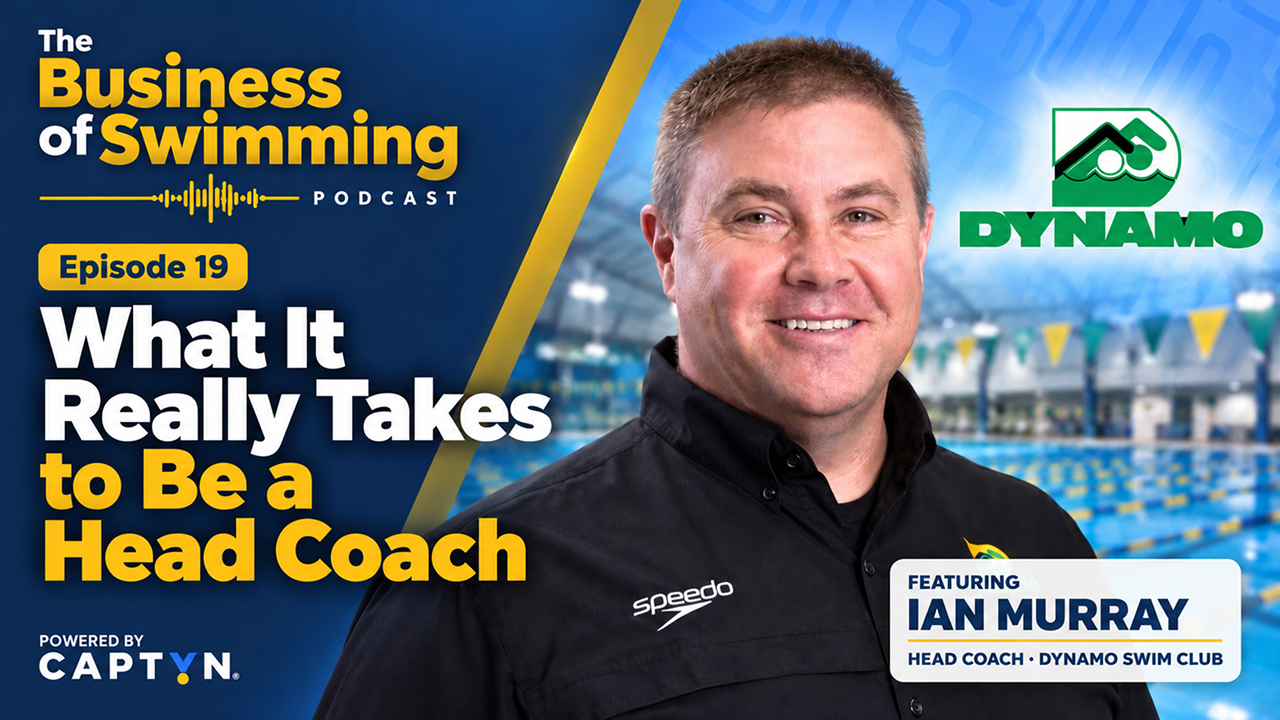
When people think about the role of a head coach, they often picture what happens on deck.
Writing workouts. Running practice. Preparing athletes for championship meets. Giving the right words behind the blocks.
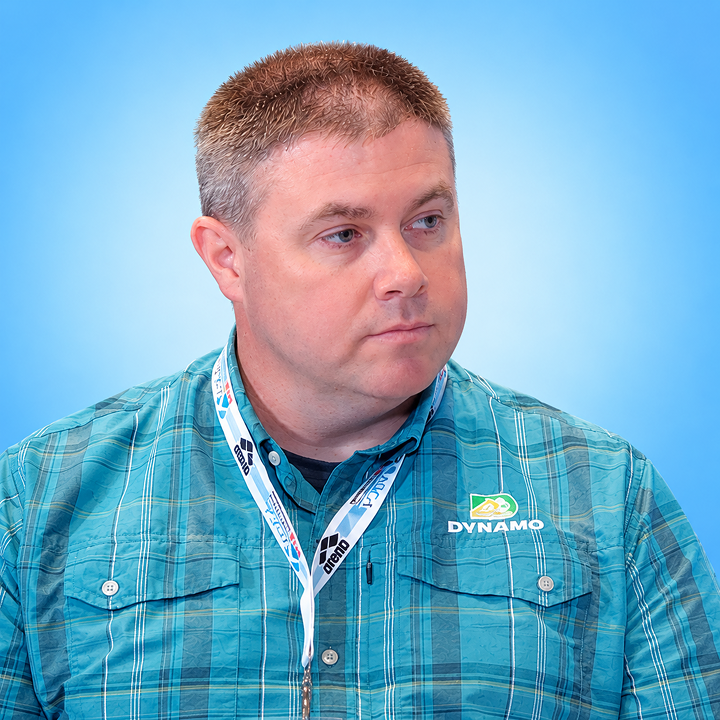
For Ian Murray, Head Coach of Dynamo Swim Club, that is still the heart of the job. But it is only one part of what it takes to lead one of the most established and complex swim organizations in the country.
Dynamo is not just a competitive swim team. It is a large 501(c)(3) nonprofit with a nationally recognized competitive program, a junior swim league, a swim school, Masters programming, recreation, wellness, lap swim, owned facilities, and a for-profit pool management arm. The competitive team alone includes roughly 750 to 800 athletes. The Dynamo Junior Swim League touches around 300 to 350 athletes in a given year. Dynamo Swim School provides 10,000 to 12,000 swim lessons annually. Dynamo Pool Management manages 50 to 60 facilities in a given year.
Leading that kind of organization requires much more than technical coaching knowledge. It requires communication, board management, staff development, financial awareness, culture building, long-term planning, and a deep understanding of people.
For Ian, that last part is the foundation of everything. When asked why he continues to show up every day, his answer was not medals, records, or meet results. It was service.
“Yeah, I think service, I really do find joy and fulfillment in helping people search for and go after goals that they potentially didn't think they were capable of doing.”
That idea shows up throughout his leadership at Dynamo. Swimming is the platform, but people are the purpose.
“I don't have any trophies in my office. I have a box of notes and letters from people that I guess I've impacted in a positive way. And that's probably one of my most prized possessions.
A Path Into Coaching That Was Not Part of the Plan
Ian did not originally plan to become a swim coach. His academic interests were actually in infectious disease, which makes his eventual path to Atlanta feel a little ironic.
“I stumbled into coaching. It was not what I originally wanted to do. I wanted to study infectious disease, so the fact that I ended up in Atlanta coaching swimming, a stone’s throw from the CDC, is pretty comical.”
His coaching career began with the Lake Erie Silver Dolphins in Northeast Ohio. After swimming at Cleveland State University, Ian trained during the summers with Jerry Holtrey. When Diana Munz made the Olympic team, Jerry needed someone to run the national group while he was in Australia.
Ian was given the opportunity, and it changed the direction of his career.
“Jerry needed someone to run the national group while he was in Australia for four weeks. He didn’t leave any workouts for me. He just let me roll with it. Eight or ten days in, I thought, ‘This is pretty cool. I’m enjoying this a lot.’”
That early experience gave Ian responsibility before he may have fully understood what it meant. Jerry did not pay much, Ian said, but he made up for it by giving Ian opportunities to lead.
“Jerry was gracious enough to keep me on. He didn’t pay me a whole lot, but what he didn’t pay, he made up for in opportunity. As a young coach in my twenties, the chance to lead teams at sectionals, junior nationals, and nationals was awesome.”
From there, Ian connected with Chris Plumb at a Zone Select Camp, which eventually led him to Carmel Swim Club in Indiana. At Carmel, Ian first served as Head Age Group Coach before moving into the Associate Head Coach role, where his responsibilities expanded into senior swimming, staff management, board conversations, budgeting, and long-term planning.
That experience helped prepare him for the broader responsibilities that come with leading a large club like Dynamo.
Ian eventually came to Dynamo after the passing of Jason Turcotte, who had been an important mentor in his coaching journey.
“I was lucky enough to be considered for the position here at Dynamo after Jason Turcotte’s passing. Jason was a very important part of my journey and one of my primary mentors. We’re both from Cleveland, and we both got our coaching start with Lake Erie Silver Dolphins. He coached me for a year at Cleveland State, and I worked the Stanford camps for him. Jerry got me started, but Jason was probably the person who made me feel like I could be good at this. To come sit here in this office was a bit daunting, but it’s something I’m super proud I took on.”
The Head Coach Role Is Bigger Than Coaching
One of the most important takeaways from Ian’s perspective is that head coaching is not just coaching.
The higher a coach moves in leadership, the more the job changes. Practice writing and athlete development still matter, but the role expands into people management, communication, planning, budgeting, board relationships, and organizational strategy.
Ian is clear about that reality.
“Ultimately, coaching's my passion, but it's probably twenty five, thirty percent of what I do. And to some people, that's shocking.
That is one of the biggest lessons for coaches who want to become head coaches. At a large club, the job is not only about building fast swimmers. It is about building systems that allow the organization to serve athletes, families, coaches, and staff well over time.
Ian also believes head coaches should be intentional about developing the leadership and communication skills required for that work. One way he has done that is through executive coaching.
“I work with an executive coach, and it has been very beneficial for me. A lot of that work is about managing people, communicating well, and learning how to have good conversations, especially difficult ones. I would encourage any head coach with the resources to pursue it as a professional development opportunity.”
For Ian, that work has helped him communicate better, listen better, ask better questions, and reduce the stress that can come from handling difficult conversations.
Mission, Vision, and Core Values Have to Be More Than Words
Like many youth sports organizations, Dynamo has a mission, vision, and core values. The difference, Ian said, is whether those words actually show up in the daily life of the program.
At Dynamo, two of the most important values are growth and grit.
“Growth and grit are two of our primary values. Every day is a growth opportunity, and every day is an opportunity to persevere through that growth.”
Ian believes those values need to be repeated often enough that they become part of the organization’s shared language. At Dynamo, the mission, vision, and core values are included in regular communication with the club, group updates, staff meetings, and board reports. That repetition helps connect the values to both performance and culture, while giving athletes, parents, coaches, and board members a clear understanding of what the program stands for.
Over time, that consistency creates alignment. By the time a parent joins the board or a coach steps into a larger leadership role, they have already been exposed to the expectations and language of the program. Culture is not built in one meeting or one document. It is built through repeated communication and consistent behavior.
How Dynamo’s Leadership Structure Works
Dynamo operates as a large, multi-faceted organization under its 501(c)(3), Dynamo Parents Club. While it is best known for its nationally recognized competitive swim team of roughly 750 to 800 athletes, the organization also includes the Dynamo Junior Swim League, Dynamo Swim School, Masters programming, recreation, wellness, and lap swim. Its swim school alone provides 10,000 to 12,000 lessons each year, while the Junior Swim League serves around 300 to 350 athletes annually. Dynamo also operates Dynamo Pool Management, a for-profit subsidiary that manages 50 to 60 facilities each year and helps support the club’s own facility operations without relying heavily on outside vendors.
At the top of the organization is a 10-member board of directors. Below the board are two executives: Ian as Head Coach and Mike Cotter as CEO.
Ian explains the division of responsibilities simply.
“The best and simplest way to describe the dynamic - is that if it's dry, our CEO deals with it. If it's wet, I deal with it. and there's a really good partnership there between myself and Mike Cotter our CEO
That kind of role clarity is one of the reasons the structure works. Everyone does not need to own everything. The board focuses on governance. The CEO handles the business and operational side. The head coach handles the swimming side. Division leaders and operational staff support the work beneath them.
This is the opposite structure of Swim Atlanta, you can compare and contrast with that story here.
Managing Up: Building a Productive Relationship With the Board
For many head coaches, the board can be one of the most challenging parts of the job. Ian’s experience at Dynamo shows how important it is for the board to understand its role.
At Dynamo, the board focuses primarily on governance, not day-to-day operations.
“Their {the board’s} job is the policies and procedures and the bylaws of the organization. And Mike and I work for the board. And they tend to stay out of the day-to-day operations. It's your job to execute the vision and the mission of the program.”
Ian’s primary contact is the board president, which helps prevent confusion and unnecessary friction.
“I don't have a lot of friction when it comes to day-to-day stuff. My primary point of contact is the board president. If I do have something that I need to use the board for or there's things coming from the board to me that I need to be aware of, it typically comes through the board president. I'm not getting random calls from any board member at any time.”
Another key part of board success is making sure people understand which role they are playing in a given conversation. A board member may also be a parent. Ian makes sure to clarify which “hat” they are wearing.
“If I'm gonna have a conversation with a board member, I'm usually gonna ask, am I talking to you as a board member, or am I talking to you as a parent right now? Just so I know how I'm going to address the conversation.”
That kind of boundary setting is practical and important. It allows people to communicate honestly without blurring governance, operations, and parent concerns.
What Makes a Board Successful?
A successful board starts with the right mix of people and the right structure around them. For Dynamo, that means building a board with a range of professional skills, program perspectives, and clear committee responsibilities.
Key pieces of Dynamo’s board structure include:
- Relevant professional expertise: Finance, legal, marketing, fundraising, and other skills that help support the organization.
- Different perspectives within the program: Parents of younger swimmers, parents of senior swimmers, and sometimes parents whose children are no longer in the program.
- Big-picture thinking: Board members who can look beyond their own athlete and focus on what is best for the club.
- Strong committee support: Finance, fundraising, sponsorship, alumni, volunteer, and team support committees help carry important work forward.
- Clear support for coaches: When board members and committees are working well, coaches can spend more time focused on coaching.
Better Meetings Create Better Leadership
Dynamo’s board does not meet every month. It meets every other month, and meetings usually last no more than 90 minutes.
That means reports and updates should be shared ahead of time so the meeting can focus on decisions, priorities, and meaningful conversation.
“Anything that needs to be shared should be shared ahead of time so that we can spend that 90 minutes on what we're trying to accomplish today, not me regurgitating my eight-page board report.”
That same philosophy also shows up in how Dynamo structures staff meetings.
Managing Down - Building and Managing a Large Coaching Staff
Dynamo’s coaching staff is large. Ian said the organization has 17 full-time coaches and roughly seven or eight part-time coaches across the competitive team, pre-competitive team, and Masters program.
To manage that many coaches, Ian uses a combination of formal reviews, regular check-ins, open-door communication, senior staff leadership, and informal relationship building.
“I do a yearly review with every coach, which gives me a chance to hear where they are and gives them a chance to tell me where they are. Sometimes that includes feedback that is critical of me, and in those moments, you have to be willing to hear it.”
Ian meets with some coaches more regularly based on their goals, needs, or desire for additional mentorship. He also maintains an open-door approach so coaches can ask for support when they need it. That individual support is reinforced by Dynamo’s senior staff, which includes an associate head coach, head age group coach, director of development, and meet director. Together, that structure creates more touchpoints across a large, multi-site organization.
Staff Meetings With Purpose
Dynamo’s staff meeting structure is intentional and designed to keep a large, multi-site staff aligned.
Key features include:
- Senior staff meetings: Focus on the big picture, long-term planning, program gaps, and upcoming priorities.
- Full staff meetings: Start with logistics, dates, and operational updates so everyone knows what is coming.
- Education and collaboration: After logistics, meetings shift into coach development, shared learning, or collaborative problem-solving.
- Division-level meetings: Smaller groups meet to discuss age-specific needs, trends, and day-to-day coaching details.
- Clear alignment: The rhythm keeps coaches informed while giving them opportunities to learn, contribute, and stay connected across sites.
That rhythm helps keep the organization aligned while giving coaches clear opportunities to learn and contribute.
Developing Coaches as a “Second Group”
Ian’s passion for developing coaches is one of the most important themes in his leadership.
He sees staff development as part of his responsibility as a head coach. It is not enough to develop athletes. A strong club also develops the people who will lead athletes.
"As much as I have a passion for developing athletes, I have a passion for developing coaches too. I want to help them with the next step in their journey of coaching.”
That means helping coaches understand what their next step should be, even if that next step eventually takes them away from Dynamo.
Ian does not see turnover only as a loss. He sees it as an opportunity.
“Your coaches are going to be sought after, whether that's their next step in the journey to go be a division lead, go be a head age group coach, go be a head coach, or move on to collegiate swimming, that is going to happen. Often people panic… “we're losing this great coach.” Well, that's an opportunity. That's just all it is. It's the only way you can view it.”
Ian views staff turnover as an opportunity to grow the coaches already within the organization. When a coach moves on, Dynamo can shift responsibilities, create new challenges, and give familiar faces a chance to step into larger roles. From there, the focus becomes filling the open position with the right person while continuing to strengthen the internal coaching pipeline.
Hiring the Person, Then Teaching the Job
When hiring coaches, Ian does not start with pedigree.
Swimming background and coaching experience matter, but they are not the first things he looks for. He is more interested in who the person is, what they value, and whether they are willing to grow.
“First and foremost, I hire the person and teach them the job. Swimming pedigree matters, and experience is a factor, but more importantly, I want to know who you are, what you value, and what you’re passionate about.”
Ian looks for coaches who are highly motivated, selfless, humble, willing to grow, and willing to do more than what is asked of them. Dynamo is not the right fit for someone who believes they already have everything figured out or expects to work with the top athletes before learning the full scope of the job. For Ian, coaching is about much more than writing workouts or standing on deck. It requires a willingness to learn every part of the role and grow into the responsibilities that come with it.
Managing Egos by Creating Shared Expectations
Every coach has an ego. That is not always a bad thing. Competitive people often want to be excellent, the best. The challenge is creating a culture where different personalities can thrive without pulling the program apart.
Ian believes diversity of personality is a strength.
“When I bring new people on board, I want diversity and personality on deck. That is a strength, not a weakness. I’ve told coaches who share the deck with me in Senior 1, ‘They don’t need another me. They need you.’”
At the same time, Dynamo creates shared expectations through an annual list of non-negotiables. Each year, the staff works together to define what they believe, how they want to operate, how they will communicate, and how they will support and respect one another. Because those expectations are built with input from the coaches, rather than handed down from Ian alone, everyone has a sense of ownership in the culture.
Creating Consistency Across a Multi-Site Program
One of the biggest challenges for a large multi-site swim club is consistency. Families should feel like they are part of one team, not separate teams that happen to wear the same cap.
Ian takes pride in the fact that Dynamo shows up as one program.
“There's a lot of collaboration that happens between our coaches site to site. And one of the biggest pieces of pride I think we take is that if you didn't know Dynamo and didn't know we were a multi-site program, if we showed up at your meet, you wouldn't be able to tell we were a multi-site program.”
That consistency does not come from forcing every coach to do the exact same workout. Instead, Dynamo aligns around shared principles and common language.
“The principles are rigid, the application of the principles is flexible.”
Dynamo’s training philosophy is built around versatility and long-term athlete development. The program emphasizes training, teaching, and competing in all strokes and all distances at every age. As swimmers get older, they may naturally move toward specific events or strengths, but Dynamo wants athletes to develop a broad foundation before narrowing their focus.
That approach also extends beyond the water. Dynamo places a strong emphasis on dryland, kicking, stroke development, and a common teaching language across the program. The goal is not just to move athletes from one group to the next, but to prepare them to thrive when they get there.
Why Coaches Work With Multiple Age Groups
Dynamo’s full-time coaches typically have responsibilities in both the senior division and the age group division. Ian sees that as important for both athlete development and coach development.
“One thing I would add is that our full-time coaches typically have two responsibilities: they coach somewhere in the senior division and somewhere in the age group division.”
Ian wants coaches to understand the full athlete development pathway. A coach who only works with older swimmers may miss what it takes to build the foundation. A coach who only works with younger swimmers may miss what athletes need to become later.
He also believes coaches may discover their true strengths in places they did not expect.
“I want our coaches to have the skill to work with all ages because they never know where they’re going to end up. We need really strong lifetime age group coaches, and we may have a few here at Dynamo who just don’t know yet that’s who they’re going to be.”
That point is especially important in a sport that often celebrates senior-level coaching more than foundational age group coaching. Ian believes great age group coaching is not only valuable. It is essential.
“It may not be the most visible or glamorous role, but working with younger athletes is real coaching. Developing great age group coaches is incredibly important for every program across the country.”
Advice for Coaches Who Want to Become Head Coaches
For coaches who want to become head coaches, Ian’s advice is practical: understand that the job is bigger than coaching.
A future head coach needs to learn what happens off the deck. They need to understand communication, management, budgeting, board relationships, parent relationships, and staff development.
They also need honest feedback about what next step actually makes sense.
“I think it’s important to have honest conversations about the appropriate next step in a coach’s journey. Ultimately, I trust them to make their own decisions, but I want to give them clear feedback, including when I think they’re ready for the next step.”
Sometimes that means encouraging someone to pursue a head coaching role. Other times, it means helping them understand they may need another step first.
“I’ve had coaches receive head coaching offers and get really excited about them. I want them to become head coaches, but sometimes my role is to help them see when an opportunity is not the right fit. That can be tough to hear, but I want them to understand their skill set, know what they should be looking for, and be patient for the right opportunity.”
Ian’s Wish for Age Group Swimming
When asked what he would wish for age group swimming, Ian did not point to faster times, bigger meets, or more medals. His answer centered on the role swimming can play in a healthier youth sports culture.
After watching his own children participate in other activities, Ian has become even more grateful for what swimming can offer families.
“I’m so grateful to be engaged in a sport that doesn’t really have that.”
For Ian, swimming has a unique opportunity to be the sport families choose because of the values it teaches, including hard work, problem-solving, resilience, and risk-taking. As the sport looks toward the 2028 Olympics in the United States, he hopes more parents see swimming as an activity that gives their children and their families a positive experience.
That does not mean forcing participation. It means building an environment athletes and families want to be part of.
“I think it’s my job to create an environment where they want to come that many times.”
That idea is a fitting summary of Ian’s leadership philosophy. Build the right environment, develop the right people, and create a culture where athletes, coaches, and families want to keep showing up.
More Ways to Explore Captyn

Demo
See Captyn in action by exploring top features and watching a free demo of the platform

Success Stories
See how organizations of all sizes are operating and growing their businesses on Captyn

Live Events
Meet up and chat with us at one of the many live events we sponsor and attend all across the country