
%20-%20All%20Logos_Primary%20-%20Full%20Color.png)
How to Build a $30,000/Year Private Lesson Side Hustle

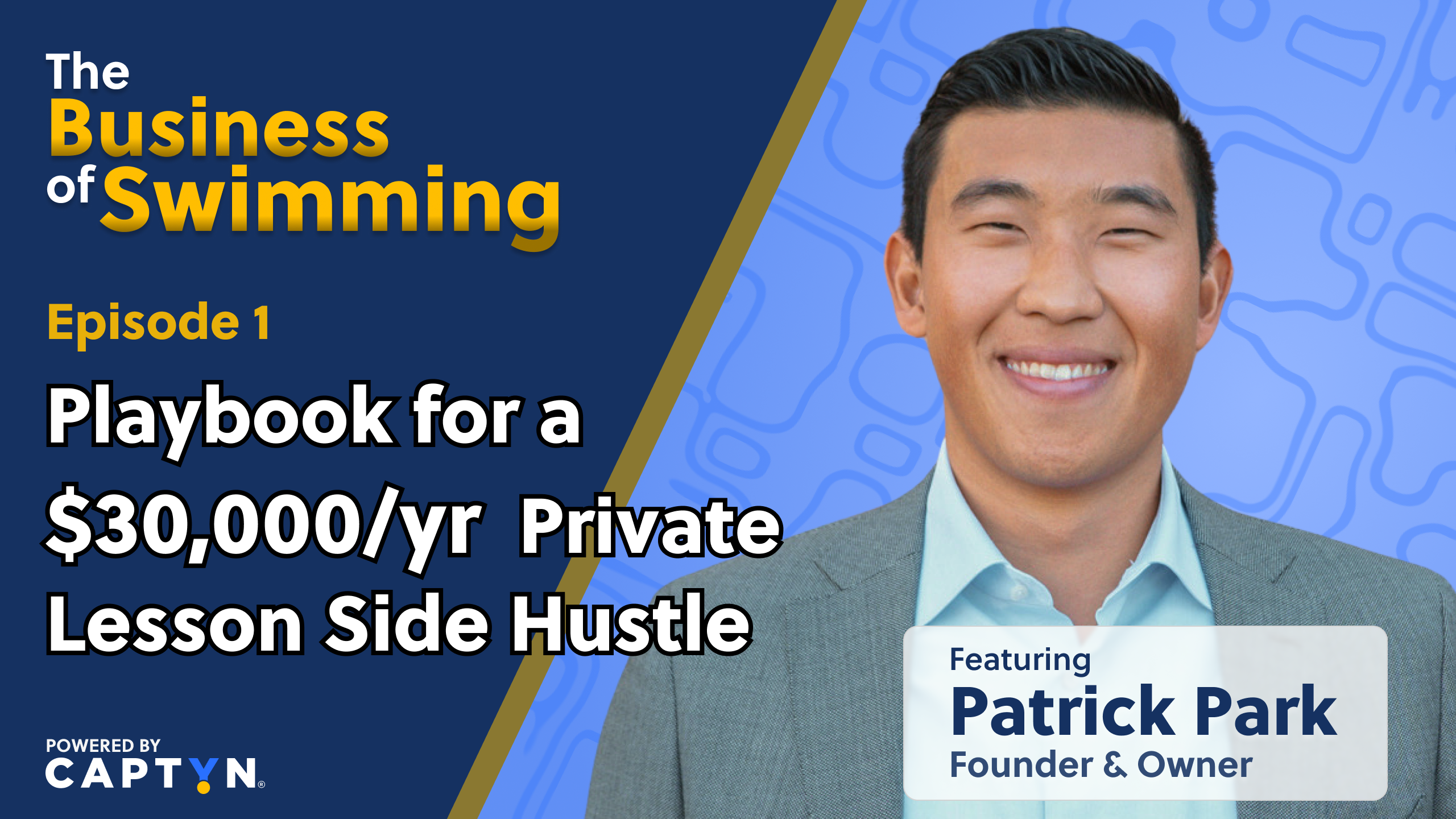


Introduction to Patrick Park's Swimming Journey
Patrick Park’s swimming journey began at age four with a little white lie about his age to join the summer league. That early start propelled him to an All-American career at ASU, training for legendary coach Bob Bowman and sharing the pool with legends like Michael Phelps. But today, we’re diving into his success out of the pool: building a successful private lesson business.
Building a Successful Private Lesson Business
For Patrick, it wasn't just about additional revenue; it was about going "all in." At his peak, he taught 12 lessons a weekend, six on Saturday, six on Sunday. While some coaches might prefer spreading lessons throughout the week, Patrick maximized his weekends to reserve his weekdays for his finance career.
Business Best Practice: Strategic Focus
Patrick’s approach mirrors the concept of "Strategic Focus" often discussed in Harvard Business Review. By condensing his side hustle into a dedicated block of time (weekends), he minimized "context switching"—a productivity killer that Forbes notes can reduce efficiency by up to 40%. This allowed him to be fully present for his finance job during the week and fully "all in" on coaching during the weekend.
Client Demographics and Market Segmentation
Surprisingly, only about 30% of Patrick’s clients were age-group swimmers (18 and under) despite having strong connections with local USA Swimming teams and guest coaching. The vast majority were triathletes and Masters swimmers.
Why? The adult athlete demographic often has the resources and a burning desire to improve, specifically in the swim leg of their races. They value expertise and are ready to invest in it.
Business Best Practice: Niche Marketing
Patrick inadvertently applied a "Blue Ocean Strategy" (a concept from INSEAD professors W. Chan Kim and Renée Mauborgne). Instead of competing in the crowded "Red Ocean" of age-group club swimming coaching where market saturation is high, he found a "Blue Ocean" of underserved adult triathletes who were desperate for technical expertise and had a higher willingness to pay.
Strategies for Attracting Clients
Patrick didn't wait for clients to come to him. He put on his cap and goggles and swam. By simply being present at the pool and showcasing his skills, he naturally sparked conversations.
"You just have to be there." — Patrick Park
Business Best Practice: The Propinquity Effect
In psychology and marketing, this is known as the "Propinquity Effect." As noted in studies cited by Psychology Today and business texts, the more frequently we interact with people, the more likely we are to form relationships with them. By simply being physically present and visible in the "marketplace" (the pool), Patrick lowered the barrier to entry for potential clients to approach him.
Soft Skills in Client Interactions
"Everyone loves compliments," Patrick notes. A simple, genuine observation about someone’s streamline or body position can open the door. It’s not about selling; it’s about being helpful. When you offer value first, the relationship follows.
Business Best Practice: Emotional Intelligence (EQ) in Sales
Harvard Business Review has long touted Emotional Intelligence (EQ) as a critical factor in sales success. Patrick’s "compliment first" strategy is a textbook application of "Reciprocity," a principle of influence popularized by Dr. Robert Cialdini. By giving a genuine compliment (something of value), he creates a psychological desire in the recipient to give back (by listening to his advice or booking a lesson).
Setting Up Initial Lessons
Patrick’s "first lesson" strategy is a lesson in low-pressure connection. He often offers the first session with a "no harm, no foul" promise.
The Lesson Structure:
- 40 Minutes in the Water: Focus on extension, body line, and breath.
- 20 Minutes in the "Office": A chat about their "equation for success" and how he can fit into it. A concept that he stole from Coach Bob and his days as a ASU Student-Athlete.
Business Best Practice: Risk Reversal
In marketing, this is called "Risk Reversal." By offering a "no harm, no foul" guarantee, Patrick removes the financial risk for the client. Forbes notes that this strategy significantly increases conversion rates for service-based businesses because it demonstrates confidence in the product and lowers the friction of trying something new.
Building Trust and Genuine Connections
"I want to be more than a swim coach," Patrick tells his clients. "I want to help you become a successful, healthy human." This mindset shifts the relationship from transactional to transformational.
Business Best Practice: The Trusted Advisor
David Maister’s classic business concept, "The Trusted Advisor," distinguishes between a vendor and a partner. A vendor sells a commodity (swim lessons); a partner cares about the client's long-term success. By focusing on the "whole human," Patrick moves up the value chain, making his services less price-sensitive and more sticky.
Encouraging Referrals and Word-of-Mouth
After building trust for a few months, asking for referrals becomes natural. For triathletes, a great question is, "Who do you grab beers with after a race?" It’s a friendly way to tap into their network without being pushy. Simply letting them know you are trying to grow your business will result in new referrals. Ask to be put in a group chat and immediately follow-up with the potential client.
Business Best Practice: Social Proof & Network Effects
Wharton marketing professor Jonah Berger discusses how "social currency" drives word-of-mouth. Patrick taps into tight-knit, high-net-worth communities (triathletes) where "Social Proof" is a strong currency. If one triathlete sees a peer improving and trusting a coach, the barrier to trust for the rest of the group drops significantly.
Navigating Pool Space Challenges
Finding time and space is often the biggest hurdle. Patrick emphasizes that if you are already at the pool for practice, the logistics are often simpler than they seem. Whether it’s fitting in an hour before or after scheduled practice creates convenience and reduces task switching.
When you don't have a home pool, you have to get creative. Patrick found success in unexpected places:
- Community Pools: Often have affordable lane rentals ($5–$10/lane).
- Private Gyms & Apartments: Look for underutilized pools in residential complexes.
- Networking: Build a relationship with the aquatics director. Ask, "How can I help?" instead of just asking for space.
Business Best Practice: Bootstrapping & Resourcefulness
Entrepreneur and Forbes consistently highlight "Resourcefulness" as a key trait of successful entrepreneurs. Patrick didn't wait for a perfect facility; he "bootstrapped" his operations by leveraging underutilized assets (apartment pools) and negotiating win-win partnerships (helping the aquatics director) to gain access with minimal capital investment.
Understanding Liability Insurance
Don't let the paperwork scare you. Liability insurance is often very affordable starting at $200 to $300 a year. Patrick compares it to renters insurance: simple to set up and essential for your protection.
Business Best Practice: Risk Management
For any sole proprietorship or side hustle, Investopedia and small business guides emphasize Risk Management. Operating without insurance exposes personal assets to liability. Securing coverage is a fundamental step in legitimizing a business entity and protecting future earnings.
The Value of Networking in Coaching
The people you teach often have incredible careers outside the pool. Patrick has coached surgeons, finance executives, and entrepreneurs. These connections have led to job offers and mentorships that far outweigh the hourly lesson rate.
Networking isn't just about what you can get; it's about what you can give. Patrick famously connected his mentor’s son with a job in his industry. "How can I gain a new friend today?" is his daily motto.
Business Best Practice: Social Capital
McKinsey often discusses the value of "Social Capital" - the networks of relationships among people who live and work in a particular society. For a young coach, the pool deck is a unique environment where typical social hierarchies flatten. A CEO and a college student are equals in the water, creating a rare opportunity to build social capital with high-net-worth individuals.
Pricing Strategies for Coaches
Patrick started at $100/session and eventually raised it to $150 at the advice of Bob Bowman. Did he lose clients? No. The demand increased.
The Lesson: Charge what you are worth.
You aren't just charging for an hour; you're charging for your expertise and the years it took to acquire it. Clients are paying for the result, swimming faster and more efficiently. They are not just paying for the time on the clock.
Business Best Practice: Value-Based Pricing
Harvard Business Review advocates for "Value-Based Pricing" over "Cost-Plus Pricing." Instead of charging based on the cost of his time (e.g., $20/hour for a lane + $20 for labor), Patrick priced based on the value provided to the client (e.g., shaving 5 minutes off an Ironman time). High prices also signal quality a psychological heuristic known as the "Price-Quality Effect." Raising his rates signaled to clients that he was a premium, expert coach, which actually increased demand.
Final Thoughts on Coaching and Self-Care
Be genuine. Make a difference. Invest in people. Patrick believes that if you do these things, good things will happen.
Operational Efficiency: Scaling with the Captyn Platform
To ensure this opportunity is scalable and does not create an administrative burden for the club, or individual coaches, they can leverage the Captyn platform to streamline execution.
- Automated Logistics: The platform handles all registration, scheduling, and payment collection, allowing coaches to manage their own book of business without adding to the club's administrative workload. [Private lesson explainer video]
- Financial Autonomy: Using Captyn’s "Departments" feature, revenue is automatically routed to the individual coach at the point of transaction. This eliminates the need for the team treasurer to perform complex financial reconciliations each month.
- Customer Retention: Automated communication workflows ensure a professional, premium customer experience that automated the ask for repeat bookings.
- Immediate Implementation: Current Captyn users can activate this feature instantly. For non-customers or individual coaches, the complete private lesson management tool is available for just $29/month, ensuring a low barrier to entry.
This playbook is designed to help coaches and organizations see the potential in private lessons—not just as a side gig, but as a sustainable revenue stream.


More Ways to Explore Captyn

Demo
See Captyn in action by exploring top features and watching a free demo of the platform

Success Stories
See how organizations of all sizes are operating and growing their businesses on Captyn

Live Events
Meet up and chat with us at one of the many live events we sponsor and attend all across the country