%20-%20All%20Logos_Primary%20-%20Full%20Color.png)
Meet the Next Generation of Swim Coaches: ASCA’s 30 Under 30

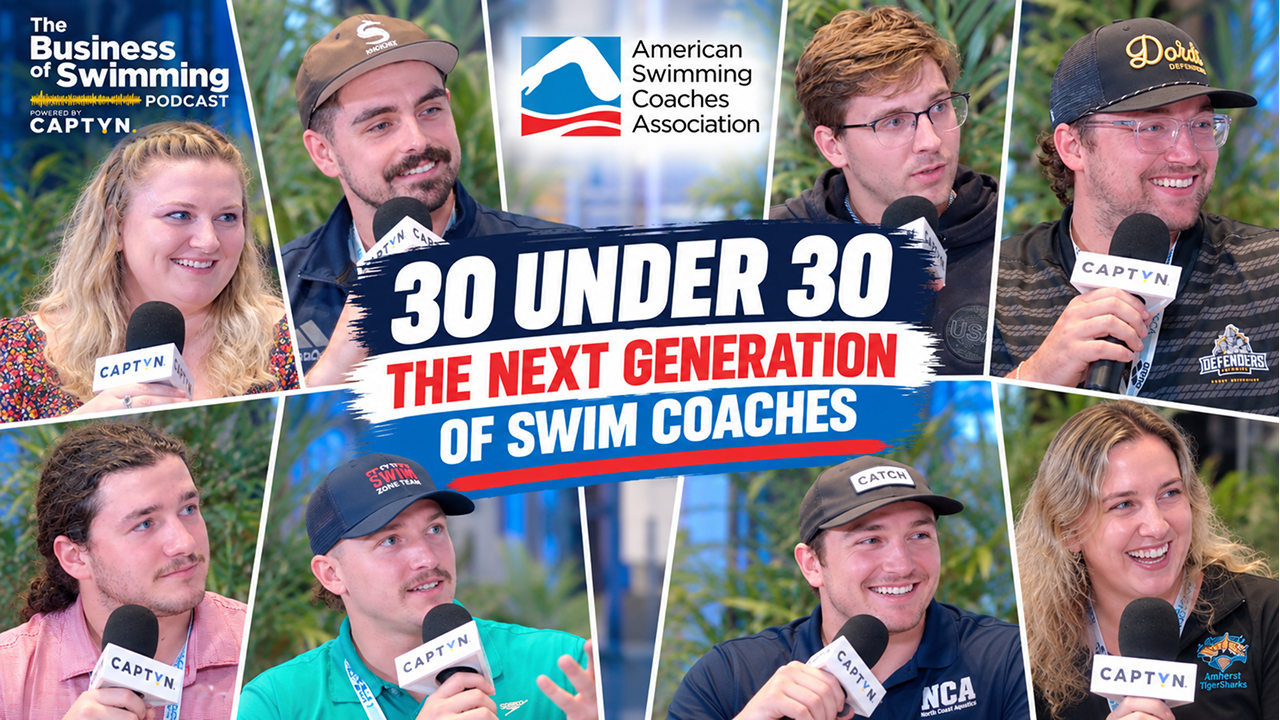

What does the next generation of swim coaches think about the future of the sport?
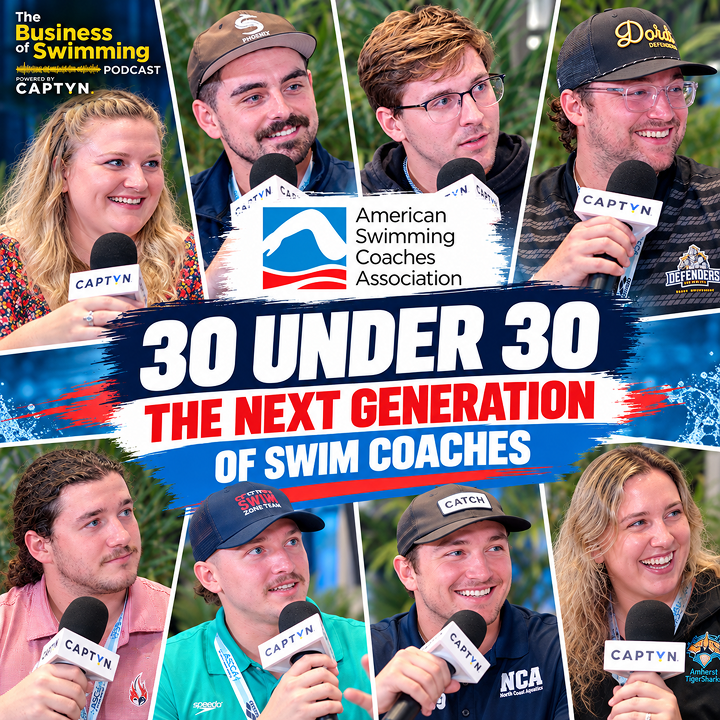
Live from the 2026 ASCA World Clinic, the Business of Swimming sat down with eight coaches involved in ASCA’s 30 Under 30 program to hear what they’re learning, how they approach coaching, and what they believe can make swimming better.
The coaches come from different corners of the sport—from age-group programs to college swimming—but several common themes emerged throughout the conversations.
Great Coaches Never Stop Learning
One of the biggest advantages of bringing young coaches to the ASCA World Clinic is the opportunity to learn from people who have spent decades on deck.
But one coach walked away with an interesting realization after listening to Greg Troy during a Meet the Legends session.
Even the coaches who have been doing this for decades still have questions.
Young coaches can sometimes feel like they’re supposed to have everything figured out. Hearing an accomplished veteran openly wrestle with many of the same questions can be reassuring.
Coaching isn’t about eventually discovering every answer. It’s about continuing to ask better questions.
That theme appeared throughout the conversations.
Another coach talked about being inspired by veteran coaches who, after 30 or 40 years in the sport, are still willing to experiment, challenge themselves, and try something new.
Curiosity doesn’t disappear when you become a great coach. It may be one of the reasons you become one in the first place.
Sometimes the Fundamentals Are the Innovation
At the same time, innovation doesn’t always mean finding the newest training methodology.
One of the coaches highlighted a World Clinic presentation about fundamentals and the importance of becoming exceptionally good at the seemingly boring details.
It’s easy for coaches to look at what elite college and professional programs are doing and attempt to replicate it with younger athletes.
But the job of an age-group coach isn’t necessarily to train kids like college swimmers.
It’s to prepare them so they can eventually train like college swimmers.
Stroke fundamentals, movement quality, turns, technique, habits, and foundational athletic skills may not always be the most exciting things to coach, but they create the foundation for everything that comes later.
Learning From Coaches Outside Your Own Program
The World Clinic also provides something difficult to replicate through a webinar or training plan: access to other coaches.
Several members of the 30 Under 30 group talked about the value of conversations with coaches from programs completely different from their own.
They discussed practice management, athlete development, dryland, team structure, coaching staffs, group progression, and how swimmers move through a program.
For one college coach, some of the most valuable lessons actually came from club swimming.
The conversation centered around taking ideas from successful club programs and asking how those same principles could apply within a college environment.
That’s one of the benefits of bringing coaches from different levels of swimming together.
A solution being used by an age-group program might inspire a college coach. A college program’s approach might give a club coach a new idea. And a conversation between two young coaches might become a professional relationship that lasts for years.
How Do We Keep More Kids in Swimming?
Another recurring theme was athlete retention.
How can swimming create competitive experiences that fit more types of athletes and families?
One coach discussed seasonal swimming opportunities as a way to keep kids involved in the sport throughout the year.
Another talked about finding ways to create shorter, more accessible competitive experiences for families who may not want swimming to consume an entire weekend—or an entire year.
A young athlete might want to swim for six or eight weeks, play basketball or baseball, and then return to the pool.
That doesn’t necessarily mean swimming failed to capture that athlete.
It may mean the sport needs to become more flexible about what participation can look like.
Those athletes matter, too.
Some may eventually choose swimming as their primary sport. Others may simply have a positive competitive swimming experience that keeps them connected to the sport.
Either outcome can be valuable.
And Then Came the Hot Seat
Of course, this was still the Business of Swimming.
After talking coaching philosophy, athlete development, and the future of the sport, each coach faced a few Hot Seat questions.
Would you rather spend a year coaching alongside Bob Bowman or Todd DeSorbo?
Would you build a college team around prime Kate Douglass or prime Natalie Coughlin?
Should 12-and-under swimmers race 25s at championship meets?
Would you rather train in a 15-meter pool or a 35-meter pool?
How often do coaches actually write workouts during warm-up?
Have you ever forgotten to take attendance?
And have you ever looked busy on your phone just to avoid a conversation with a parent after practice?
The answers generated plenty of laughs—and a few coaching confessions.
A Look at Swimming’s Next Generation
The eight coaches featured in these conversations have different jobs, different athletes, and different philosophies.
Some coach 11- and 12-year-olds. Others work with high school or college athletes. Some are focused on dryland and athlete development, while others are thinking about recruiting, team structure, or the changing landscape of college athletics.
What connects them is a willingness to learn.
They’re asking questions.
They’re studying coaches who came before them.
They’re building relationships with their peers.
They’re experimenting with new ideas while developing a deeper appreciation for the fundamentals.
And they’re thinking seriously about how swimming can create better experiences for the athletes coming next.
That’s ultimately what ASCA’s 30 Under 30 program is designed to encourage.
The coaches shaping swimming’s next several decades are already on deck.
They’re just getting started.
More Ways to Explore Captyn

Demo
See Captyn in action by exploring top features and watching a free demo of the platform

Success Stories
See how organizations of all sizes are operating and growing their businesses on Captyn

Live Events
Meet up and chat with us at one of the many live events we sponsor and attend all across the country