%20-%20All%20Logos_Primary%20-%20Full%20Color.png)
Why the SlipFIN Pro Will Revolutionize Swimming

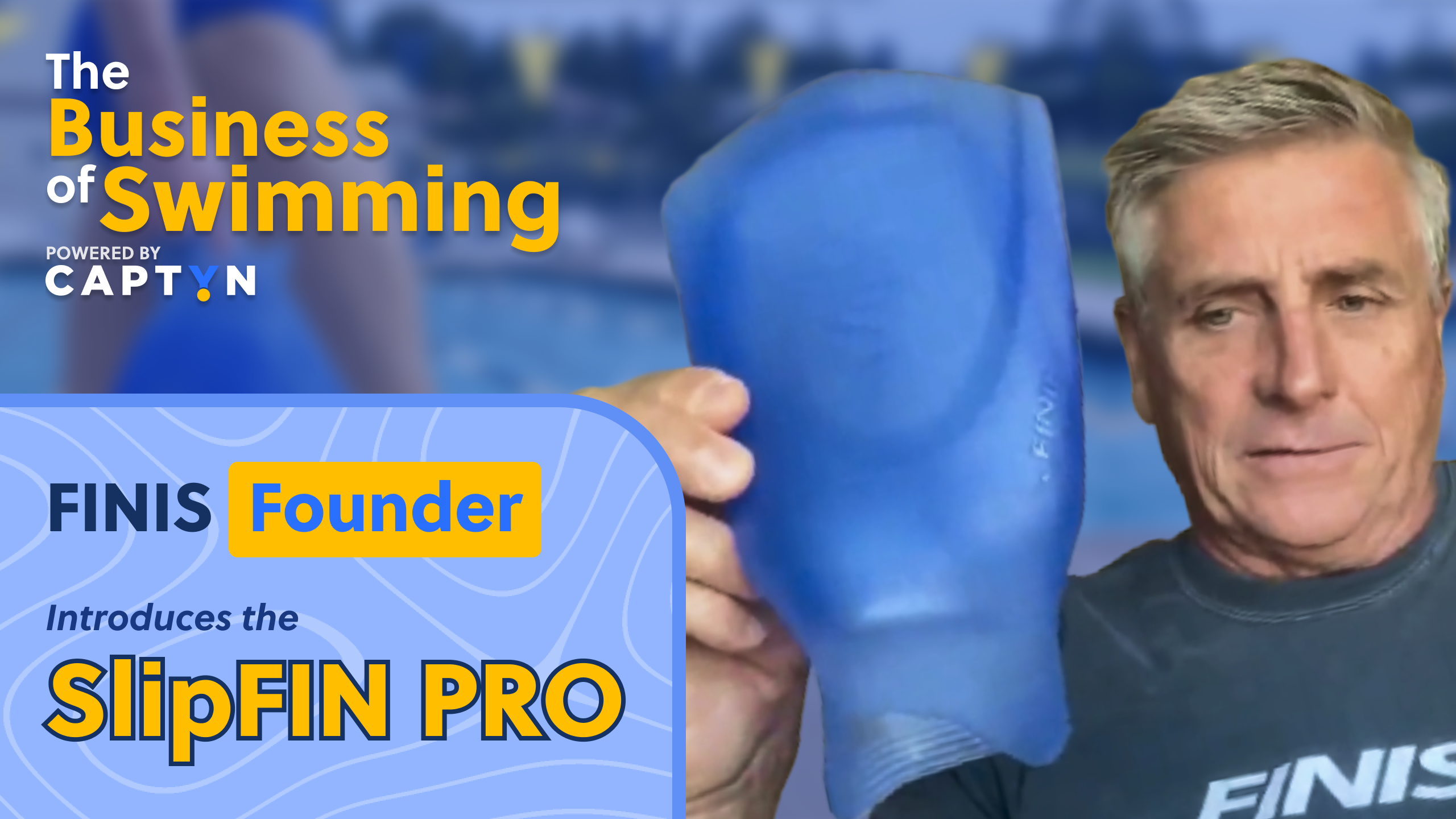


FINIS SlipFin Pro: Why Coaches Should Be Excited About the Future of Fin Training
Every once in a while, a piece of swim equipment comes along that makes coaches stop and rethink what is possible in training.
Not because it is flashy. Not because it is another version of something we already have. But because it solves a problem we have all learned to live with for far too long.
That is exactly what the FINIS SlipFin Pro feels like.
As coaches, we have used fins forever. Long fins, short fins, Zoomers, body surfing fins, power fins, specialty fins. They all have a purpose. They all help swimmers go faster, kick harder, or feel something different in the water.
But every coach also knows the frustration.
Fins fall off. Fins cause blisters. Fins change the stroke. Fins make breaststroke training awkward. Fins can be too stiff, too heavy, too long, too loose, or too painful. And if you coach age group swimmers, you have probably spent half a set watching kids stop at the wall to adjust their fins, complain about sore feet, or put socks on because their heels are getting rubbed raw.
The SlipFin Pro is exciting because it is not just another fin. It is a different way to think about fins.
Instead of strapping something to the heel, locking the foot into a rigid pocket, or forcing the swimmer to adapt their kick around the equipment, the SlipFin Pro slips over the top of the foot and uses a gentle suction fit to stay in place. The heel and ankle stay free. The foot can move more naturally. The swimmer gets added surface area and speed without losing the rhythm and feel of their stroke.
For coaches, that opens up some really interesting possibilities.
Race-pace training with better bodyline. IM training with fins. Breaststroke with fins. Warmups that help swimmers feel smooth instead of restricted. Drill work that transitions naturally into swimming. Faster swimming without the same level of race effort.
That is why this product is worth talking about.
1. What is the SlipFin Pro?
The FINIS SlipFin Pro is a strapless swim training fin designed to fit over the top of the foot without a heel cup or ankle strap.
The easiest way to explain it is this: it makes the swimmer’s foot bigger without locking up the ankle.
Traditional fins usually attach to the foot through a full foot pocket, heel cup, or strap. The SlipFin Pro works differently. The swimmer gets the fin wet, slips it onto the foot, then squeezes out the air or water from the top of the fin. That creates a gentle suction effect that helps keep the fin in place.
FINIS describes the process simply:
Dip. Slip. Squeeze. Swim.
That is the whole concept.
The fin is made from a soft, flexible material that creates a secure fit while still allowing the heel and ankle to move freely. Instead of feeling like a bulky piece of gear attached to the foot, the SlipFin Pro is designed to feel more like a natural extension of the swimmer’s bodyline.
From a coaching perspective, that is the part that matters most.
This is not built to be a giant power fin. It is not trying to turn every kick set into a strength set. It is not designed to overpower the swimmer’s natural rhythm.
It is designed to give swimmers a little more speed, a little more lift, and a little more connection to the water while preserving the movement patterns we actually want them to train.
That makes it especially interesting for:
- Race-pace swimming
- IM training
- Drill-to-swim progressions
- Warmup and cooldown work
- Faster repeats with better technical consistency
- Swimmers who struggle with traditional fins because of discomfort, blisters, or poor fit
The SlipFin Pro currently comes in three sizes, small, medium, and large, with sizing based on instep circumference, not shoe size. That is a major shift from traditional fins, and we will cover that more later.
The short version is this: the SlipFin Pro is a lightweight, strapless training fin that gives swimmers added propulsion without sacrificing ankle freedom, stroke rhythm, or comfort.
And for coaches, that is a big deal.
“Every one of our athletes when they first received their SlipFins and swam with them, every single one of them said, ‘Oh my god, they’re so comfortable.’” - John Mix CEO FINIS
2. Problems of traditional fins
Before we talk about why the SlipFin Pro is exciting, we need to be honest about the problems coaches have dealt with for years.
Traditional fins work. They have helped millions of swimmers develop better kicking strength, body position, and speed. But they also come with a long list of headaches.
Fins fall off
Every coach has watched this happen.
A swimmer pushes off the wall, the fin slips halfway off, and now the repeat is done before it really starts. Or they dive in for a fast 25 and one fin disappears on the breakout. Or they hit a flip turn and the fin folds, twists, or pops off.
For normal kicking sets, that is annoying.
For race-pace sets, it is a much bigger problem.
If the goal is to swim fast, hold a stroke rate, hit a specific tempo, or complete a set at a high level of focus, equipment issues can ruin the purpose of the set. A swimmer loses a fin, stops at the wall, misses the sendoff, or finishes the repeat with one fin on and one fin off.
That is not the training effect the coach wanted.
Fins cause blisters and sore feet
This may be the most common issue, especially with age group swimmers.
Heel cups rub. Straps dig into the Achilles. The top of the foot gets irritated. The sides of the feet get sore. If the fin is too tight, the swimmer complains. If it is too loose, it rubs even more.
Then comes the need for socks.
Every coach has seen the swimmer who starts the set fine, then halfway through is digging in the equipment bag for socks because the fins are tearing up their feet. For big kick sets, this is almost expected.
The problem is not just comfort. It changes how coaches write practice.
If you know half the group is going to have foot issues after a longer fin set, you may avoid the set entirely. Or you may shorten it. Or you may change the training goal because the equipment becomes the limiter.
That is frustrating.
Traditional fins restrict ankle movement
Great kicking requires ankle mobility.
We want swimmers to feel the water. We want the foot to move naturally. We want flexibility through the ankle, connection through the bodyline, and a kick that supports the stroke instead of fighting against it.
But many traditional fins limit that freedom.
A full foot pocket or heel cup can reduce the natural range of motion. A strap can place pressure across the Achilles. A stiff fin can make the swimmer’s kick feel mechanical. Instead of teaching the swimmer to move through the water more naturally, the fin can force them into a movement pattern that does not look or feel like real swimming.
That can be especially noticeable during fast swimming.
If the swimmer has to slow down the kick to move a big fin, but speed up the stroke rate because they are moving faster, the rhythm of the swim can start to disconnect. The arms and legs are no longer working together in the same way they would during actual racing.
That is a major coaching problem.
Big fins can change stroke timing
Body surfing fins and larger training fins have become more common in swim training, especially for speed and power work. They absolutely have value. They help swimmers move fast and create a strong training load.
But they can also change how the swimmer moves.
A larger fin often creates a slower kick tempo. The swimmer may be going faster, but the kick itself does not always match the natural tempo of the stroke. The swimmer gets speed, but sometimes at the expense of timing, rhythm, and technical specificity.
For pure kicking sets, that might be fine.
For swimming sets, especially race-pace work, it can be a problem.
As coaches, we are always trying to make practice transfer to racing. If the equipment creates a movement pattern that looks very different from racing, we need to be thoughtful about when and how we use it.
Breaststroke and IM training are limited
This is one of the biggest opportunities with the SlipFin Pro.
Traditional fins are usually not friendly to breaststroke. If you are doing IM work with fins, coaches often have to modify the breaststroke portion. Swimmers might do breaststroke pull with dolphin kick, flutter kick, or take the fins off for that part of the repeat.
That means they are not really training the whole IM.
For coaches who love IM training, this has always been a limitation. You can use fins for fly, back, and free, but breaststroke becomes the awkward exception.
If a fin allows swimmers to train all four strokes more naturally, that changes the way we can write sets.
Sizing is a constant battle
Traditional fins are usually sized by shoe size.That sounds simple, but in a team environment, it creates problems.
Kids grow. Feet grow fast. A swimmer who needed one size last season may need another size this season. Some swimmers are between sizes. Some have narrow feet. Some have wide feet. Some need a fin that fits length-wise but is too loose around the foot. Others can barely squeeze into the right length because the foot pocket is too narrow.
For teams and parents, that means more buying, more replacing, and more frustration.And for coaches, it means more swimmers standing at the wall with fins that do not fit correctly.
3. Advantages of SlipFin Pro
The SlipFin Pro is exciting because it addresses many of those problems at once.It is not perfect for every set or every purpose, but it gives coaches a tool we have not really had before: a fin that adds speed and surface area while preserving a more natural kick.
“In an industry saturated with fins, meaningful innovation is hard to achieve. With the new Slip Fin, FINIS has not only done that, but may help shape the future of propulsive training in aquatics.” - by Tony Batis Head Coach, Palo Alto Stanford Aquatics
No heel cup or ankle strap
This is the first major advantage.
The SlipFin Pro leaves the heel and ankle free. That means there is no strap pressing into the Achilles and no heel cup rubbing the back of the foot.
For swimmers who regularly deal with blisters, hot spots, or soreness from traditional fins, this is a big improvement. For age group coaches, it may be the difference between writing fin work with confidence and avoiding it because the group always complains halfway through.
Comfort matters because consistency matters.
If swimmers can wear fins longer without pain, coaches can use them more effectively. Warmup, drill work, race-pace sets, and cooldown can all become more realistic options.
Natural ankle movement
Because the heel and ankle are open, the swimmer can move the foot more freely.
That is one of the most important coaching benefits.The SlipFin Pro does not force the ankle into a locked position. It gives the swimmer a larger surface area while allowing the foot to remain part of the bodyline. That helps preserve the natural rhythm of the kick.
For swimmers with good ankle mobility, that means they can still use it.For swimmers learning how to connect the kick to the stroke, that means the equipment is less likely to create a completely different movement pattern.
Better stroke rhythm
One of the most interesting points from the podcast conversation with John Mix was the idea that bigger fins can sometimes decouple the kick tempo from the stroke tempo.
That makes sense to any coach who has watched swimmers try to sprint with oversized fins. The swimmer is moving fast, but the kick may be slower and heavier than their natural kick. The arms speed up, the legs lag behind, and the whole stroke can start to feel disconnected.
The SlipFin Pro offers a different feel. Because it is lighter and more compact, swimmers can maintain a more natural kick tempo. That can make it especially useful for swim sets where the coach wants the swimmer to move fast without losing the rhythm of real swimming.
It stays on when fitted correctly
One of the biggest questions swimmers and coaches will have is obvious:
Will it actually stay on? That is where the suction fit matters. When the swimmer puts the fin on correctly and squeezes out the air and water, the fin creates a secure seal around the foot. That helps it stay in place during swimming, push-offs, turns, and fast work.
That is a major coaching advantage. If a fin stays on during starts, turns, underwater work, and race-pace repeats, coaches can write faster sets without worrying as much about equipment interruptions.
It can be used for all four strokes
This may be one of the most exciting parts of the SlipFin Pro. According to the FINIS FAQ, the SlipFin Pro is designed to work with freestyle, backstroke, breaststroke, and butterfly. That opens up a lot of doors.
For IM coaches, this is huge.
Instead of modifying breaststroke or taking fins off mid-set, swimmers can train IM with a more consistent equipment setup. That means more realistic IM speed, more rhythm, and more continuity through the set.
Can swimmers just throw them on and immediately crush breaststroke with perfect timing? Probably not. Like any equipment, there is a learning curve. But the fact that breaststroke is possible at all makes this fin very different from most traditional options.
“The past month, I have a couple of swim camps with over 100 swimmers, plus sharing with some of my swim coaching friends. The comments started out by they feel weird, then these fins feel awesome. They are light and my feet have more flow with the SLIPFIN. I can't believe they work with the breaststroke kick and going fast in and out the wall. It is a great product, no more sores on my feet!” - Mike Stromberg
Race-pace training without race-pace effort
This is where coaches should really start paying attention.One of the biggest challenges in modern training is helping swimmers experience race speed without always demanding full race effort.
You want swimmers to feel the bodyline, tempo, stroke rate, and rhythm of fast swimming. But you cannot ask them to go to the well every single day. You need ways to let them rehearse speed with enough support that the nervous system, technique, and confidence can develop without burying them physically.
The SlipFin Pro fits that idea well.
It can give swimmers a boost in speed while allowing them to maintain a more natural kick and body position. That makes it useful for race-pace 25s, 50s, broken swims, IM work, and longer repeats where the goal is speed with control.
John shared a great example involving James Guy using the SlipFin Pro during a demanding set of 8 x 400s where different 100s were held at race pace. The important coaching takeaway is not that every team should copy that exact set. The takeaway is that elite swimmers are exploring how this fin can support high-level race-pace work without the same discomfort or disruption that traditional fins might create.
“He said his body was high, his hips were high, his legs were engaged, his stroke tempo was faster. And he said to me, ‘I can’t put my finger on it exactly what translated on race day, but there was something about all the training I had done that was faster.’” - John Mix on James Guy’s feedback
That is exciting.
Better warmup and cooldown feel
Several swimmers described using the SlipFin Pro during warmup and cooldown because it helps them feel long, smooth, and connected.
That makes sense.
Warmup is not just about getting loose. It is about setting up the stroke for the session. If a swimmer can use a fin that encourages a long bodyline, comfortable movement, and natural ankle freedom, that can help them ease into practice with better feel.
Cooldown is similar.
After a hard set, swimmers often need to move smoothly and reset their body. A comfortable fin that does not beat up the feet can be useful there.
More confidence for coaches
This might be the biggest advantage.
The SlipFin Pro gives coaches confidence to write sets that may have been difficult with traditional fins.
You can write faster work without worrying as much about fins falling off. You can explore IM sets without removing fins for breaststroke. You can use fins longer without as many complaints about blisters. You can ask swimmers to hold rhythm and tempo without forcing them into a clunky fin pattern.
That does not mean every set should use SlipFin Pro.
But it does mean coaches have a new option.
And good coaches love options.
4. Drawbacks of SlipFin Pro
As exciting as the SlipFin Pro is, coaches should introduce it with realistic expectations.
No piece of equipment is perfect. The SlipFin Pro solves a lot of problems, but it also comes with a few learning points.
There is a learning curve
This is not the same as grabbing a traditional fin and shoving your foot into it.
Swimmers need to learn the process:
- Wet the fin and foot
- Put the correct fin on the correct foot
- Insert the foot properly
- Squeeze out the air or water
- Check the seal
- Swim
The first few times may take longer.
If you are used to giving swimmers ten seconds to throw on fins before the next repeat, you may need to adjust when introducing the SlipFin Pro. Build in a little time. Teach it correctly. Let swimmers figure out the feel.
After a few uses, it should become much faster and more natural.
Left and right matter
The SlipFin Pro has a left and right fin. It is shaped around the anatomy of the foot, so swimmers need to pay attention.That sounds simple, but coaches know how this goes.
Some swimmer will put it on the wrong foot. Someone will try it upside down. Someone will rush and not create the seal properly. This is why coaches should try the fins themselves first. If you know how it should feel, you can coach swimmers through the process much more effectively.
Sizing is different
Sizing by instep circumference is a good thing, but it is also new.
Parents and swimmers are used to buying fins by shoe size. With SlipFin Pro, that is not the right approach. A swimmer with a large shoe size may still wear a medium. A swimmer with a narrow foot may size smaller than expected. A swimmer with a wide foot may need to size up.
Teams will need to educate families on the measurement process.For coaches, the best approach is to get samples in small, medium, and large, then let swimmers test the fit before making team-wide recommendations.
It is not a traditional power fin
This is important. If the goal is a heavy resistance kick set where swimmers are trying to build raw leg strength, a bigger or more traditional power fin may still have a place.
The SlipFin Pro is not trying to be the biggest, heaviest, hardest fin in the bag. Its value is in speed, comfort, bodyline, rhythm, and specificity. That makes it excellent for many swim sets, drill sets, warmups, race-pace work, and IM training. But coaches should still think carefully about the training goal.
If you want power overload, you may still use a different fin.
If you want speed with natural movement, SlipFin Pro becomes very interesting.
Younger swimmers may need smaller sizing
The current sizing is small, medium, and large. FINIS has indicated that an extra small is in development for younger age group swimmers. That matters for club programs.
Many 13 and older swimmers will likely fit into the current size range, but some younger or smaller swimmers may need a smaller size. Coaches working with 10 to 12 year olds should test carefully and avoid assuming that small will fit every athlete.
“I was hooked after 15 seconds of wearing the Slipfin. I get asked time after time again to try products, endorse gear, see what's new, etc. These are unlike anything I've ever used. After using them, I was blown away. The form fit, the comfort, the fact that the entire ankle area is wide open and free to move (think no blisters for little kids) and no rigidity issues like certain fins have. I tried my hardest to shake the fins off my feet -- and I could not. But they are so easy to slip on and then remove once you learn that all it takes is a finger to break the form fitting seal that keeps the fin comfortably yet snugly in place. I'm a huge fan of the Slipfin.
- Mike Koleber, Nitro Swimming
5. How to use the SlipFin Pro in practice
This is where the SlipFin Pro gets really fun.
As coaches, the real question is not just, “Is this a cool product?”
The real question is, “What can I do with it that helps my swimmers train better?”
Here are some practical ways I would think about using it.
Race-pace repeats
This is one of the best use cases.
The SlipFin Pro can help swimmers reach faster speeds while preserving a more natural kick tempo and bodyline. That makes it useful for sets where the goal is to rehearse race-speed movement without demanding full race effort every time.
The key coaching point is this: Use the fin to help swimmers feel speed, not escape technique.
The stroke should still look like swimming. The kick should stay connected. The swimmer should feel fast, long, and controlled.
Faster than race-pace work
There is an old coaching idea that swimmers need to experience speed before they can race at that speed.
Swim Fast to Swim Fast!
The SlipFin Pro gives coaches another way to create that experience. Because the fin is compact and secure, it may be especially useful for fast 25s, dive work, underwater work, and challenge sets where swimmers need equipment that will not derail the repeat.
Examples:
- Dive 25s with SlipFin Pro, focusing on breakout speed
- 4 rounds of 3 x 25 faster than race pace, plenty of rest
- 6 x 50 From Block as 25 underwater and breakout speed, 25 smooth fast
- 75s from a dive, trying to be smooth as possible to 100 goal pace
With traditional fins, these sets can get messy if fins fall off or interfere with turns. The SlipFin Pro gives coaches a better chance of keeping the focus where it belongs.
IM training
This might be the most exciting coaching application. If swimmers can use SlipFin Pro for all four strokes, then coaches can write IM sets that preserve the full structure of the event.
The breaststroke piece is what changes the game.
Instead of modifying breaststroke or asking swimmers to remove fins, the coach can keep the set flowing. That is valuable for rhythm, conditioning, and confidence.
Drill sets
The SlipFin Pro can be a strong tool for drill work because it gives swimmers support without completely changing the stroke.
For drills, I would use it when I want swimmers to feel:
- A longer bodyline
- Better balance
- More connection from kick to stroke
- Smooth transitions from drill into swim
- Natural ankle movement
The goal is not just to go faster. The goal is to help swimmers feel the line and rhythm you want them to reproduce without equipment.
Warmup & Cool Down
This may sound simple, but it matters. A good warmup sets the tone for the whole practice. If swimmers feel long, smooth, and connected early, the quality of the session improves.
A great feeling cold down means the athletes leaves ready for the next practice.
The SlipFin Pro can be useful for warmup because it helps swimmers ease into speed and body position without the heavy feel of traditional fins. It can take the work load off the upper body and allow swimmers to feel silk smooth in the water.
For elite swimmers, warmup and cool is not throwaway yardage. It is where they build feel and re-establish good technique. This fin fits that mindset.
Kick sets
The SlipFin Pro may not replace every power kick fin, but it can still be useful for kicking.
Because swimmers can keep a tighter, faster kick, coaches may use it to teach bodyline and reduce extra drag. It is especially interesting for streamline kicking, underwater dolphin kick, and body position work.
The key is to know the purpose.
If you want maximum resistance, use a larger fin. If you want bodyline, tempo, and natural kick mechanics, SlipFin Pro may be the better choice.
Team implementation
For clubs, I would introduce the SlipFin Pro in phases.
- Coaches test first. Coaches should get in the water, put them on, swim with them, and understand the feel.
- Test with a small group. Use a few experienced swimmers who can give useful feedback.
- Teach the fit process. Make sure swimmers know left from right, how far to insert the foot, and how to squeeze out air and water.
- Use them in warmup and drill work first. Let swimmers build comfort before using them in high-speed sets.
- Add race-pace and IM work. Once swimmers understand the fit, start using the fin for the sets where it can really shine.
For Captyn teams, this can also connect directly to team equipment management. If your team uses Captyn and has a FINIS store integrated, families can order equipment like the SlipFin Pro and have it drop shipped directly to their home. That makes it easier for teams to introduce specialty training gear without creating extra administrative work for the coach.
Regardless of your team sponsor, you can create a team store with FINIS to access speciality products like the SLIPFIN PRO and Tempo Trainers at discounted prices.
Click here to have a conversation with FINIS
6. How to size the SlipFin Pro for your swimmers
This is one of the most important things coaches and parents need to understand:
SlipFin Pro sizing is based on instep circumference, not shoe size.
That means you are not measuring how long the foot is. You are measuring around the top of the foot, just in front of the ankle.This is different from traditional fins, and it is one of the reasons the SlipFin Pro can work across a wide range of swimmers.
A swimmer with a large shoe size may not need a large SlipFin Pro. A swimmer with a narrow foot may size down. A swimmer with a wide foot may size up. It is about the shape and circumference of the foot, not the length.
How to measure
To find the right size:
- Use a soft tape measure.
- Wrap it around the top of the foot, just in front of the ankle.
- Keep the tape flat and snug.
- Measure the full circumference of the instep in centimeters.
- Match the measurement to the FINIS size chart.
If you do not have a soft tape measure, use a shoelace or string. Wrap it around the foot, mark the length, then measure it against a ruler.
Size guide
The current SlipFin Pro size chart is:
SlipFin Pro Size
Instep Circumference
Small
21 to 24.5 cm
Medium
23.5 to 27 cm
Large
26 to 28+ cm
There is overlap between sizes, and that is intentional.
What if a swimmer is between sizes?
If a swimmer falls between sizes, use the training goal and comfort preference to decide.
- For a snug, performance fit, size down.
- For a more relaxed, comfort fit, size up.
- For a narrow foot, size down.
- For a wider foot, size up.
Coaches should also remember that fit can depend on how the swimmer plans to use the fin.
A sprinter or high-level swimmer doing fast underwater work may prefer a snugger fit. A distance swimmer using the fin for warmup, cooldown, or smoother aerobic work may prefer a slightly more relaxed feel.
Team sizing tip
For teams, the smartest approach is to order samples first.
A good starting sample set might include:
- 2 to 3 small
- 2 to 3 medium
- 1 to 2 large
Let swimmers test them. Measure feet. Take notes. Build your team recommendation from real swimmer feedback.
This is especially important because shoe size can be misleading. Some swimmers with long feet may still measure as a medium. Some swimmers with narrow feet may fit smaller than expected. Some swimmers with wide feet may need more room.
The goal is not to guess. The goal is to measure, test, and find the best fit.
7. How to put on the SlipFin Pro
The SlipFin Pro is simple once swimmers learn the process, but coaches should teach it clearly at the beginning.
The phrase to remember is:
Dip. Slip. Squeeze. Swim.
Step 1: Check left and right
SlipFin Pro includes a left and right fin.
Before putting them on, make sure each fin is on the correct foot. This matters because the fin is shaped to match the foot.
If a swimmer says it feels strange, check this first.
Step 2: Wet the fin and foot
The SlipFin Pro is easiest to put on in the water.
Wet the swimmer’s foot and the fin before putting it on. This helps the fin slide into place and helps create the proper seal.
Step 3: Slip the fin onto the foot
Pull the fin onto the foot using the sides.
The fin should go over the front portion of the foot. It is not designed to cover the heel.
According to FINIS, the SlipFin Pro should be pulled over approximately one-half to three-quarters of the foot. Some swimmers may insert the foot deeper depending on the fit, speed, and training purpose.
As a general coaching cue:
- Deeper fit can feel more secure and performance oriented.
- Slightly less deep can feel more relaxed and comfortable.
The swimmer should not force the toes all the way to the front. Extra space near the toes is normal and helps create the suction effect.
Step 4: Squeeze out the air and water
This is the most important step.
Once the fin is on, squeeze the top or front area of the fin to release excess air and water. This creates the suction that helps hold the fin in place.
If the fin does not feel secure, there is probably too much air or water inside.
Have the swimmer reset, squeeze again, and check the seal.
Step 5: Push off and test the feel
Before using the SlipFin Pro in a fast set, let swimmers test it.
Start with easy swimming, light kicking, or a few short push-offs. Let them feel how the fin moves and how the foot sits inside.
The first few times may feel different. That is normal.
Give swimmers time to learn it before asking them to use it in high-speed work.
Step 6: Remove by breaking the seal
To take the SlipFin Pro off, peel the edge of the fin away from the foot to release the suction. Once the seal is broken, the fin should slide off easily.
Do not have swimmers yank or fight the fin. Teach them to break the seal first.
Final thoughts
The SlipFin Pro is exciting because it gives coaches a new way to think about fin training.
It does not replace every fin. It does not eliminate the need for thoughtful coaching. It is not magic equipment that automatically makes every swimmer better.
But it does solve real problems.
It reduces the pain points of traditional fins. It frees the heel and ankle. It allows for a more natural kick. It can stay secure during fast work. It opens the door for better IM training. It helps swimmers experience speed while preserving bodyline and rhythm.
For coaches, that is the part that matters most.
We are always looking for ways to help swimmers train more specifically, more comfortably, and more consistently. The SlipFin Pro gives us another tool to do that.
And as a coach, that is what makes it exciting.
One swim, and you will understand.


More Ways to Explore Captyn

Demo
See Captyn in action by exploring top features and watching a free demo of the platform

Success Stories
See how organizations of all sizes are operating and growing their businesses on Captyn

Live Events
Meet up and chat with us at one of the many live events we sponsor and attend all across the country