%20-%20All%20Logos_Primary%20-%20Full%20Color.png)
Why the "Block Party" Concept is the Future of Athlete Retention

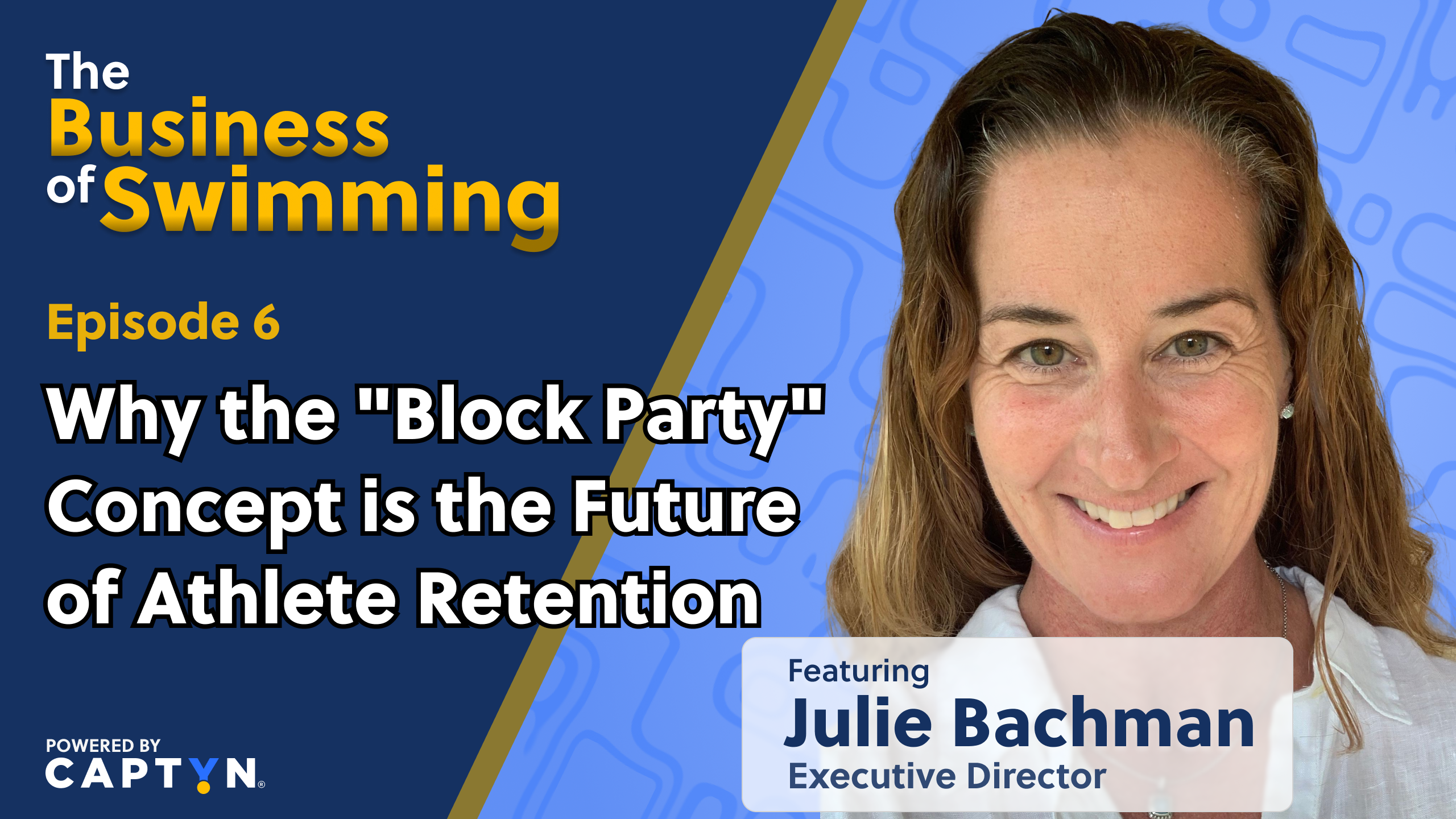


In a recent episode of The Business of Swimming podcast, hosts Chris Bowker and Thomas Meek sat down with Julie Bachman—Executive Director of Gulf Swimming and the driving force behind the USA Swimming Block Party National Pilot Program.
The conversation wasn't just about swim meets; it was about a fundamental shift in how we view the "business" of youth sports. As Julie puts it:
"We collectively don't like to talk about swimming as a business... but we have bills to pay, we have salaries to pay, and we have customers to satisfy."
— Julie Bachman
If you’ve been looking for a way to grow your club, retain your "seasonal" athletes, and reduce coach burnout, Block Party is the most important tool in your arsenal.
The Origin: A Solution for "Complicated" Racing
Block Party didn't start in a boardroom; it started in a town of 1,500 people with a 25-meter pool. Julie, a former professional basketball player turned swim mom, started a team of 65 kids and immediately hit a wall of complexity.
"I learned very quickly that all of this was incredibly complicated and I couldn't figure it out. Why can't we just run a swim meet? We've got the facility, we've got a timing system... it was just really frustrating."
— Julie Bachman
Beyond the red tape, the cost was a barrier. Families were spending $400 to $500 for a single weekend of racing. Julie realized that if swimming wanted to stay competitive, it needed a "home game" model—something short, nearby, and affordable.
Block Party: An Complementary Competitive Experience
Block Parties are not meant to replace existing swim meet infrastructure; instead, they enhance the overall competitive experience for athletes, parents, coaches, and organizations. While many organizations rely on traditional meet revenue as a substantial portion of their operating budget, Block Party serves as a powerful new tool to meet families and athletes halfway between recreational swimming and full-year dedication.
This model creates a positive, high-value experience for every stakeholder involved:
- Coaches and Organizations: Enjoy a streamlined, fast meet-creation process that remains fully compliant with USA Swimming guidelines. Smaller events require fewer resources. Thus eliminating the need for extensive hospitality or large-scale facility rentals. Without the overhead of travel, hotels, or team meals, the focus returns to what matters most: simple, high-energy fun.
- Swimmers: Experience a low-pressure, welcoming introduction to competition. Whether it’s an intrasquad, dual, or tri-meet, swimmers feel more confident in a familiar environment that mirrors the excitement of college swimming. Because events are contained within a single session or day, athletes don't have to choose between swimming and their other sports or games, promoting a more well-rounded and engaged athlete.
- Parents: Get the joy of watching their children compete and grow in a manageable timeframe. With short sessions, families don't have to sacrifice their entire weekend or use vacation days to support their athlete. The lower cost of entry is a significant win for families, making the sport more accessible and sustainable.
- Officials: Trainees can develop their skills in a supportive, low-pressure environment. The Block Party provides the necessary experience to grow within the sport without the immediate requirement of a full-weekend commitment. This "bridge" helps bring new officials along at their own pace, encouraging a deeper commitment to the sport over time.
5 Strategic Ways Block Party Can Grow Your Business
Chris Bowker highlighted that the goal of any swimming experience should be to "engage athletes at their level of commitment... and move them further down the path of desire and commitment."
- The Retention Funnel: Create a seasonal track for kids who aren't ready for year-round commitment but love to race. Look at each block party as an opportunity for athletes to fall in love with the sport.
- Introducing New Families: Introduce parents to a "rec-league" environment where they can learn to time without the stress of a 500-person invitational. While their athletes gain experience and confidence with reduced anxiety.
- Strategic Distance Events: Need a time in the 1650 or 400 IM? Run a "Distance Block Party" on a Friday night and make it a team bonding experience. Everyone pays, everyone gets to swim, everyone wins.
- Local Mini-Leagues: Partner with a neighboring team or other sites for a quick dual meet that actually counts toward official SWIMS times. Organizations can still charge for entries and athletes still have times that count.
- Clinic + Competition: Host a stroke clinic and follow it immediately with a sanctioned race to show parents and athletes "proof of progress."
Benefits to the LSC: Growing the "Bench"
A common concern is that Block Party meets "take money away" from the LSC. Julie argues the opposite:
"It's not that the money doesn't exist. The money just stays with the club or it stays in the parents' wallets... We need to allow our clubs to utilize their financial resources."
— Julie Bachman
- Uptick in Championship Qualifiers: By providing a "Learn-to-Compete" entry point, teams are seeing more kids fall in love with racing and eventually qualifying for (and paying for) major LSC championship meets.
- Official Training: These meets serve as a low-pressure environment to train new officials, effectively "building the bench" for the LSC's officiating pool. This allows parents to grow their skills, experience and confidence for larger and championship meets.
- Reducing Fatigue: Shorter, local meets reduce "volunteer fatigue" and official burnout, coach burnout across the LSC.
The Equation for Success: Friends + Fun = Love of Swimming
Julie emphasizes making swimming "sticky", keeping kids in the sport for longer. In traditional meets, "the little kids aren't watching the big kids swim anymore... and that's really unfortunate.” A Block Party is a great tool to build whole team culture building experiences. "The special sauce is that you get to go do something fun with your friends" and their hero races.
By removing the intimidation factor, you allow athletes to build confidence. You eliminate the "No Time" (NT) status. Long weekends lead to fatigued coaches and "Fatigued coaches lead to bored athletes," Julie warned. Block Party gives coaches a few weekends back so they can bring high energy to the deck each and every Monday.
Tactical Playbook: 7 Steps to Your First Block Party
For LSC’s who are resistant to change, Julie has a clear message: "Our clubs don't need to be governed. They need to be served and helped.” Providing tools that lead to experiences and in turn grow the swimming base is vital to the business of swimming.
- Define the Goal: Aim for short sessions (2–4 hours).
- Sanction via SWIMS: Direct $175 fee; can be done as late as the morning of the meet.
- Software Setup: Use Hy-Tek, SwimTopia, or SwimCloud.
- Officiating Path: Choose between "OTS-Eligible" (standard refs) or "Standard Block Party" (coaches/YMCA/NFHS).
- Legal Timing: Minimum of three manual watches per lane (pads optional).
- Create an Experience: Add DJs, potlucks, and themes (e.g., Shamrock Showdown).
- Admin: Reconcile entry file prior to meet and upload results directly to SWIMS.
As Chris concluded, "Don't not be on the bandwagon. The clubs that are innovating are the ones that are growing their business."
Ready to run your first Block Party? Check out the USA Swimming Block Party resources and start building a "stickier" team culture today.
More Ways to Explore Captyn

Demo
See Captyn in action by exploring top features and watching a free demo of the platform

Success Stories
See how organizations of all sizes are operating and growing their businesses on Captyn

Live Events
Meet up and chat with us at one of the many live events we sponsor and attend all across the country