%20-%20All%20Logos_Primary%20-%20Full%20Color.png)
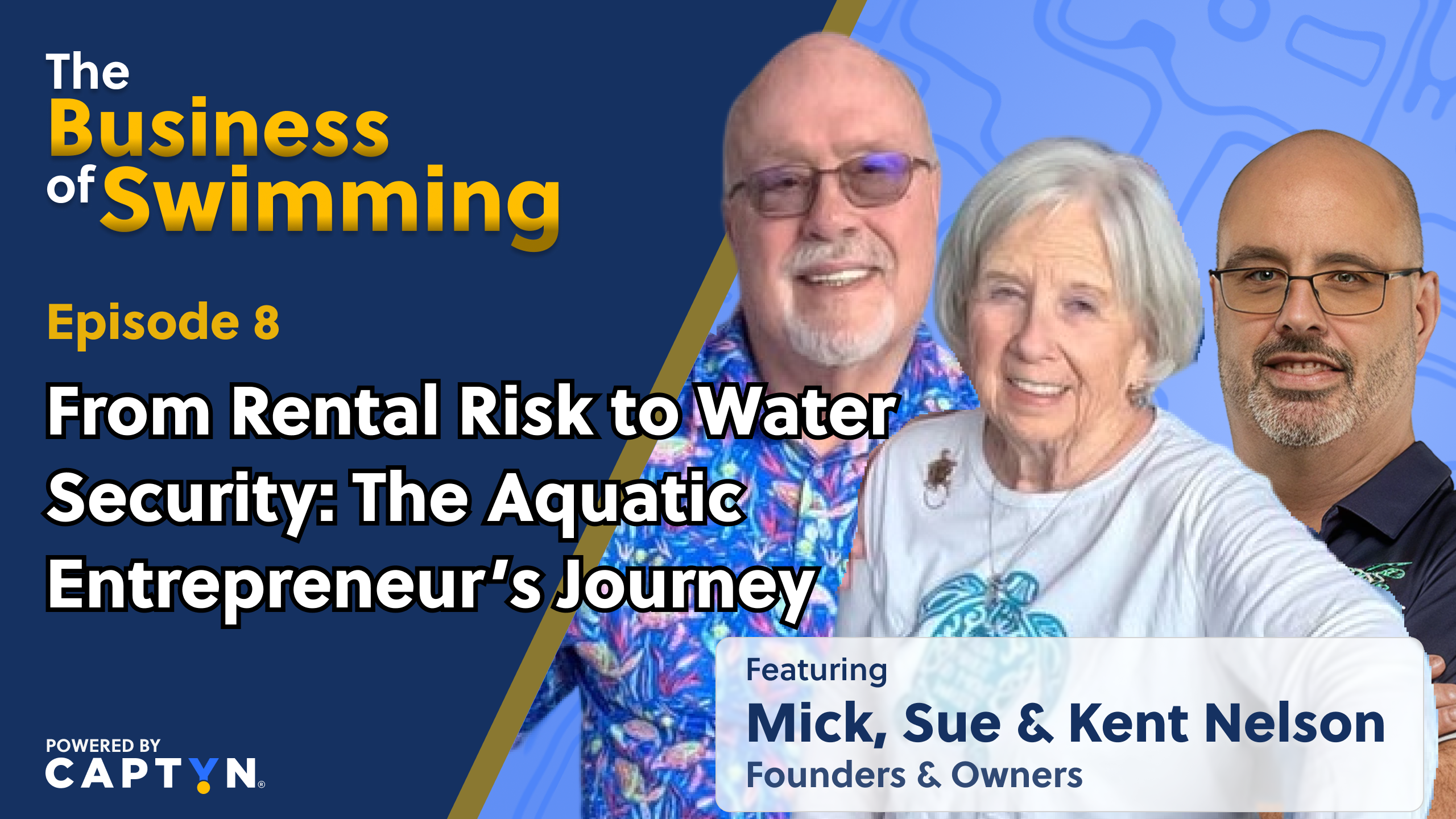
From Rental Risk to Water Security: The Aquatic Entrepreneur’s Journey




From Rental Risk to Water Security: The Aquatic Entrepreneur’s Journey
For most swim team owners, the "dream" is a 50-meter facility with ten lanes and a state-of-the-art scoreboard. But for the 80% of clubs in the U.S. that operate with fewer than 200 athletes, that dream is often a financial trap. They are stuck in a cycle of water insecurity, building their business on borrowed time at a county or school pool.
As Sue and Mick Nelson of Total Aquatic Programming often share, the journey to true water security isn't about "getting a pool"—it's about building a business that can finally afford to own one.
The Hidden Fragility of Water Insecurity
Most swim clubs today operate in a state of water insecurity. They are tenants in facilities they don’t control, relying on the shifting priorities of county boards, school superintendents, or private gym owners. In this model, your business is built on a foundation of "borrowed time." You are one closed-door budget meeting or one facility manager’s departure away from losing your rental contract.
When a school official decides the natatorium is over budget, they don't give you a 90-day warning—they simply lock the doors. For a team of 150 swimmers, this volatility is a death sentence. Membership declines, revenue evaporates, and your best coaches are forced to look for more stable "real" jobs.
Water security, by contrast, is the shift from tenant to operator. It means having operational control over the schedule and the asset. It’s the peace of mind that comes from knowing that when you wake up at 4:30 AM, the pool will be open, the water will be warm, and your business will still exist next season. True security isn't just about owning the land; it’s about building a diversified aquatic business that makes you an indispensable partner to your community, rather than just another line item in someone else’s budget.
Step 1: The "One Lane" Profit Center
The story of water security begins long before you break ground. It starts in a single, underutilized lane. Take the example of Patriot Aquatics, where they realized over $250,000 a year from a single 25-yard lane. That's right, just one lane well programmed.
Instead of waiting for evening team practices, approach local motels and churches. Don't ask for the whole pool; ask for three hours and part of the pool to start. By filling that space with high-margin programs like ISR (Infant Swimming Resource) and group lessons, you can generate six figures of revenue from a single lane. Leverage senior swimmers and assistant coaches to staff these lessons. This "one lane" model created the Profit and Loss a bank actually wants to see: sustainable, predictable, and diverse. Also you can easily show how you can scale with more space.
"USA Swimming was based a lot off of the old Little League models of youth sport... but the business of swimming is truly what builds these facilities." — Kent Nelson [1]
"If you do the full spectrum and not just focus on your kids getting to the team, you are going to develop a business and a trust in the community." — Sue Nelson [1]
Step 2: The Symbiotic Operator
Once you’ve built your "seed" capital, the next chapter is about operational control. You may not own the land yet, but you can own the schedule.
Think of Enfinity Aquatics and many other teams, who mastered the art of the symbiotic partnership. They didn't wait for a municipality to build a pool for them; they partnered with seasonal community or HOA pools. By offering to manage and maintain a neighborhood pool in exchange for year-round access, they secured their destiny. They didn't build a $6 million natatorium; they used an SERG-type building, an architectural membrane that costs a fraction of a permanent structure ($50/sq ft vs $400/sq ft), to enclose an outdoor pool and protect their profit-heavy lesson programs from the elements.
Step 3: The Optimized Engine
With a secure location and a growing bank account, you have to optimize your core: the 150–200 swimmers you already have. The aquatic entrepreneur realizes that 10-and-under developmental groups are a "rec league," not a mini-Olympic team.
You have one coach, that coaches 2 lanes of 10 and under developmental swimmers. These are swimmers who haven’t achieved an A time yet. Practice is 1.25 hours long. A lane can hold 8 swimmers at this level.
- 48 swimmers
- $125/month
- 9 months/year
≈ $54,000 annually
Now when that fills up, offer another practice right after that and now you have 96 kids that occupy 2 lanes for 2.5 hours each day Monday through Saturday. You have the potential of making $108,000 for one coach 2.5 hours a day in just 9 months.
Step 4: Build in phases
Phase one: Profit Center First
When the day finally comes to build, the entrepreneur works backwards. Programming precedes design. You don't build the competition pool first; you build the TAD lesson pool (Temperature, Access, Depth).
"We believe in phasing, which means build the pool that you need to make it a successful business." — Sue Nelson
A 30x50 ft pool heated to 90 degrees with stair entry is your mortgage-payer. It is cheap to maintain and serves the most underserved groups in your community—infants, homeschoolers, and adaptive athletes. Only once this pool is at 80% capacity do you move to Phase 2: the eight-lane training tank.
Phase Two: Expand with options
Build the 8-10 lane 25 yard training or mini-competition pool. Maybe you are building a second lesson pool that is 25 yards where you can run age group swimming and more advanced lessons or offer a place for more temperature sensitive groups to swim. But now you are only limited by your ability to program and scale.
Step 5: Scale the business by serving the community:
This means expanding beyond traditional team practices to capture the "hidden" hours of the day:
- Infants and toddlers: High-margin "Mommy and Me" or ISR classes that require warm water and small footprints.
- Home school groups: A massive, daytime demographic that needs PE credits and social interaction.
- Adaptive and special needs athletes: Perhaps the most underserved group; hosting mini-camps, lessons, or special olympics training. Simply offer sensory-friendly open swims can build incredible community loyalty.
- Adults learn-to-swim: Over 50% of adults in the U.S. don't know how to swim; this is a huge, untapped market for private midday lessons.
- Masters swimming, Triathletes, & Fitness swimmers: Perfect for those early morning and lunch-hour blocks to drive consistent membership revenue.
- School partnerships: Working with local districts to get second graders in the water for drowning prevention.
- Recreational swim teams: Low-commitment "seasonal" options for kids who love the sport but don't want the year-round competitive grind.
- Specialty events: Weekend stroke clinics, birthday parties, and even lifeguard certifications, kayaking classes and so much more.
The objective is clear: Diversify revenue streams and increase community engagement. By layering these customer segments, you transform a "swim team" into a vibrant aquatic hub that is indispensable to the community—and far more attractive to a bank.
The Final Pitch: Selling Safety, Not Meets
"We realized right away that we can’t sell this concept of every small to medium-sized city having a swim team. But we can sell the concept of every single community needs to prevent drowning." — Sue Nelson
When you eventually stand before a city council or a bank manager, you don't talk about "A" times or state championships. You talk about drowning prevention, population served and impact on the community. Only 16% of bond issues for swim teams pass, but a community's commitment to a "zero drowning summer" is a mission everyone can get behind.
Water security is not a single decision; it is the result of intentional, sustained business growth. It’s about building a legacy that survives the next budget meeting.
More Ways to Explore Captyn

Demo
See Captyn in action by exploring top features and watching a free demo of the platform

Success Stories
See how organizations of all sizes are operating and growing their businesses on Captyn

Live Events
Meet up and chat with us at one of the many live events we sponsor and attend all across the country