%20-%20All%20Logos_Primary%20-%20Full%20Color.png)
The Fundraising Playbook Swim Clubs Actually Need

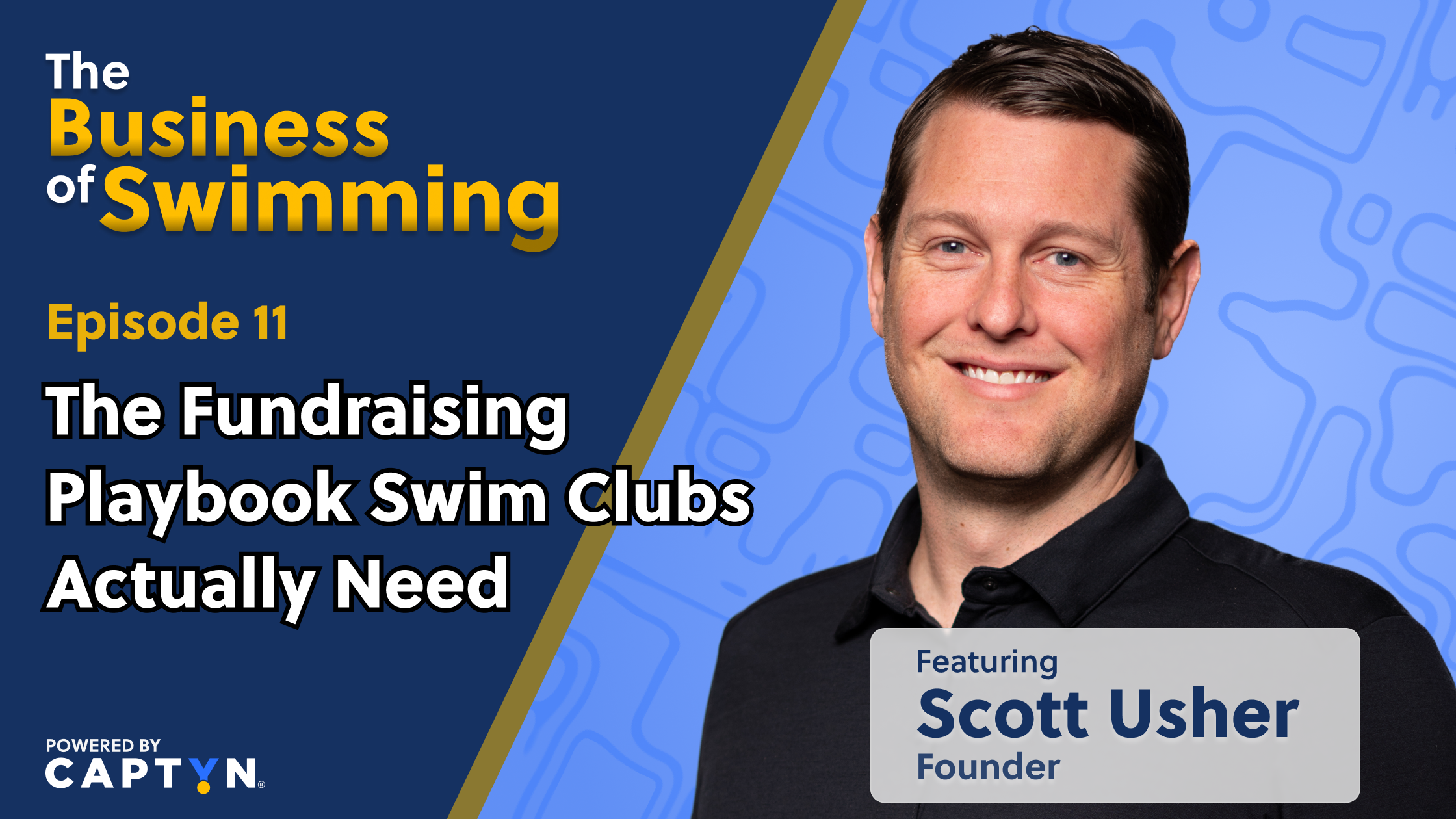


A master class in building a culture of philanthropy by 2004 Olympian Scott Usher.
In this episode of Business of Swimming Podcast, Scott shares practical, club-level secrets to doing all of this the right way, from shaping a story that increases giving to building year-round strategies that create stability instead of stress. If your team is tired of piecing together revenue one event at a time, the playbook ahead can change what’s possible for your program.
Scott Usher knows swimming from every angle. A 2004 U.S. Olympian and Olympic finalist who later coached on deck, Scott eventually moved into the business side of sport and built a career leading revenue and fundraising across Swimming and Cycling National governing bodies. Today, through Scott Usher Philanthropy, Scott works as an outsourced fundraising and sponsorship partner for swim clubs and mission-driven athletic organizations, helping them generate the support they need to grow programs, invest in coaching, and build facilities that last.
At the center of Scott’s approach is one idea that many clubs overlook: a culture of philanthropy. In simple terms, it means fundraising is not a once-a-year scramble or a last-minute Swim-a-Thon to cover payroll. It is an ongoing, organized way of engaging families, alumni, and community supporters who want to see the program thrive, and who feel connected to the mission because the club consistently shows impact, gratitude, and transparency.
It also helps to clarify two terms that often get lumped together. Fundraising is philanthropic support, usually driven by mission and impact, from individuals and families who want to give back. Sponsorships are partnerships with businesses that receive clear benefits in return, like visibility across meets, emails, signage, and the club’s digital channels. Both can be powerful. The difference is the “why” behind the support and what the club commits to delivering.
Mini Case Study 1: The “Less Is More” Major Gifts Plan
A club tied to a successful collegiate program had a clear goal: raise roughly $2.5M to expand access to an additional training site. They had alumni support and momentum, but the campaign had started to stall. Scott’s fix was not “ask more people.” It was “ask the right people, the right way.” He helped the team narrow their focus to a short list of high-potential supporters, build a clear framework for the ask, and match each prospect with the best relationship-led messenger. Over an 8 to 10 month push, the club regained traction and moved within reach of closing out the campaign. Now the team can move forward with the project.
What clubs can copy: build a tight prospect list, define the ask, and prioritize warm relationships over mass outreach.
Mini Case Study 2: Turning “We Need Money” Into a Story People Want to Fund
Scott emphasized that most clubs do not struggle because families will not give. They struggle because they are forced into vague, last-minute fundraising like “support the team,” which produces small, one-time donations typically out of obligation. His approach starts with a deep-dive on what the club truly needs, like starting blocks, staffing, water time, travel, scholarships, and facility upgrades. Then he reframes those needs into a story of impact that is easy to say yes to. When donors can clearly connect their gift to something meaningful, a real outcome that is athlete focused or community focused the support becomes less transactional and more motivated.
What clubs can copy: stop selling “fundraising” and start selling impact with one clear purpose and a simple narrative.
Mini Case Study 3: Bundling Meets Into a Year-Long Sponsorship
A smaller club was running 12 to 14 meets per year to help cover expenses, which is anexhausting lift for staff and volunteers. They had sold a sponsor for one larger meet, but pitching each meet separately made sponsorship feel like a short, one-weekend ad buy. Scott’s move was to bundle all events into a single year-long partnership. That meant bigger audience numbers, more assets like emails, website placement, and signage across the season, and a clearer ROI story for a business. Instead of “sponsor this one meet,” the pitch became “be visible with our community all year.”
What clubs can copy: stop selling isolated events and sell a season-long partnership with consistent visibility and clear deliverables.
Great Storytelling is a multiplier for Fundraising.
Scott’s point in this episode is straightforward. Swim clubs rarely have a “donor problem.” They have a clarity problem. When a club cannot clearly explain where the money is going and what it changes, support becomes small, inconsistent, and driven by obligation. When the story is specific and compelling, giving becomes easier, larger, and repeatable.
Great fundraising storytelling is not about fancy words. It is about connecting a real need to a real outcome. A pool is not just a pool. Travel is not just travel. Staffing is not just payroll. Each one is a lever that unlocks better athlete experiences, safer training environments, stronger coaching support, and more opportunity for more families in your community.
Scott also emphasized that the mission stays the same, but the message should flex depending on who you are talking to. Some people lean into long-term legacy and desire to build something that lasts. Others connect to immediate athlete or community impact. The best approach is to share the vision clearly, then listen for what part of the story matters most to the person in front of you, and tie their support directly to that outcome.
When clubs lead with a clear story and a clear purpose, fundraising stops feeling like begging and starts working like a mission people want to support.
The Importance of Transparency in Fundraising
Scott made transparency a non-negotiable. If people do not know how much was raised, where it went, and the impact it created, they might give once, but they are far less likely to give again.
Transparency is simple and practical. Be clear about the goal, share progress, and after the campaign, report back in plain language on how the funds were used. When clubs consistently close the loop like this, trust grows, donors feel respected, and fundraising becomes repeatable instead of starting from zero each year.
Creating Sustainable Revenue Through Sponsorships
Scott’s advice on sponsorships is to stop treating them like one-off transactions and start treating them like partnerships. A local business is rarely excited about buying a logo placement for one weekend meet. Community organizations want consistent visibility, a clear story, and a relationship that feels connected to impact.
That is where bundling comes in. Instead of selling sponsorships meet by meet, clubs can bundle their assets into a year-long package that is easier for a sponsor to justify and far more valuable in practice. When you combine multiple meets, your website, team communications, apparel branding and in-venue visibility, you are no longer pitching a single event. You are offering season-long access to a highly engaged community of families. Many times your impression count can go from a couple thousand to tens of thousands. Creating value, and consistency that brands are willing to invest in.
To make sponsorships work long term, Scott highlights a few “do the basics well” principles. Be clear about what the sponsor gets and actually deliver it. Communicate consistently throughout the year, not just when you need renewal. Track simple performance signals when possible, like email open rates, link clicks, or website traffic to sponsor pages, meet attendance, anything the reports back value. Then close the loop with gratitude and update with pictures when possible, just like you would with donors, so sponsors feel valued and confident renewing.
When clubs bundle assets, deliver consistently, and report back with transparency, sponsorship revenue becomes recurring and not transactional. It stops being a scramble and starts becoming a sustainable part of the club’s financial engine.
Stewardship That Keeps Donors and Sponsors Coming Back
Scott’s message was clear. The biggest mistake clubs make is treating fundraising like a one time transaction. They run a campaign, collect money, and disappear until the next time they need support. Stewardship is what prevents that. It is the set of habits that tells donors and sponsors their support mattered, was used well, and is still making an impact.
At a high level, strong stewardship has three parts.
First, say thank you quickly and personally. A tax acknowledgment is important, but it is not the same as gratitude. A short personal email, a handwritten note, or a quick phone call from a coach or board member goes a long way. Scott also highlighted how powerful it can be to involve athletes in safe, appropriate ways, like thank you notes, photos, or a short message that shows what the support made possible.
Second, close the loop with transparency. Clubs should report back on what was raised and what it funded in plain language. Donors want to know their money did what the club said it would do. Sponsors also want to see follow through, plus simple proof of delivery on benefits.
Third, stay in touch even when you are not asking. Scott’s rule of thumb is to engage supporters multiple times each year after a gift, not just once. Those touchpoints can be simple. A short update after a big meet, a season recap, a facility progress photo, a Thanksgiving thank you message, or a mid season impact note are all easy ways to keep donors connected without making it feel like another ask.
Best practices on when and how often to ask for support
A good pattern is to avoid back to back asks with no updates in between. If the last time someone heard from the club was a donation request, the next message should be gratitude or impact, not another request.
For most clubs, a sustainable cadence looks like:
- One major annual campaign tied to clear priorities for the season or year
- Occasional targeted asks when there is a specific, time sensitive need with a clear story and outcome
- Consistent non ask communication throughout the year so supporters feel like partners, not ATMs
For sponsors, the renewal ask should feel like a natural continuation of the relationship. That usually means regular check-ins during the season, delivery of benefits as promised, and a simple year end recap of what the sponsor received and the community impact they supported.
When clubs combine gratitude, transparency, and consistent touchpoints, recurring support becomes much easier. The next ask stops feeling like starting over, because the relationship never went cold.
How a Team Can Build a Culture of Philanthropy
A culture of philanthropy is what happens when giving is not treated like an emergency lever the club pulls once a year. It becomes normal, organized, and connected to the team’s mission. Scott’s core idea is that donors are not just funding a line item. They are investing in athlete opportunity, program stability, and the long-term future of the club.
To build that culture, start by getting clear internally. Clubs need alignment between the coach, board, and key volunteers on what the priorities are and why they matter. When the club can communicate a simple vision for the next one to three years, supporters have something real to rally behind.
Next, make giving easy to understand. That means focusing on a few clear goals instead of constantly rotating new asks. It also means explaining the impact in plain language. Not “operating support,” but what that support creates, like more water time, better staffing, safer training conditions, scholarships, or facility upgrades.
Then, reinforce trust through consistent follow-through. Thank people quickly, share progress while the campaign is running, and close the loop after it ends with what was raised and what it funded. When supporters see the club do what it said it would do, giving shifts from obligation to funding the mission.
When to Seek Professional Help and the Real Value of Philanthropy Services
A lot of clubs wait to “get fundraising figured out” before they bring in help. Scott’s take is that the right time is usually when a club is serious about growth, facing a real financial need, or recognizes that the team does not have the time, bandwidth, or experience to build a consistent fundraising and sponsorship engine.
A few common signals it is time to get professional support include:
- Fundraising has become reactive, like scrambling to cover rising costs
- A facility project, staffing investment, or major expansion requires more than small-event fundraising
- Support exists, but efforts stall because there is no clear plan or consistent follow-through
- Sponsorships feel hard to sell, or reset every season instead of renewing as partnerships
- The club relies on a single volunteer, and the system disappears when that person rotates off the board
Scott also framed the value in a way that clicks for business minded leadership teams. Hiring a philanthropy partner should be viewed less like an expense and more like an investment. You are putting dollars into a proven revenue function with the expectation of a return, not just in dollars raised, but in systems built, relationships strengthened, and a repeatable plan the club can run year after year. When it works, the club is not just paying for fundraising support. The club is building a long-term engine for stability and growth.
Connect with Scott Usher on LinkedIn
More Ways to Explore Captyn

Demo
See Captyn in action by exploring top features and watching a free demo of the platform

Success Stories
See how organizations of all sizes are operating and growing their businesses on Captyn

Live Events
Meet up and chat with us at one of the many live events we sponsor and attend all across the country