%20-%20All%20Logos_Primary%20-%20Full%20Color.png)
The Origin of FINIS and Innovating in Aquatics for 30 years



Introduction
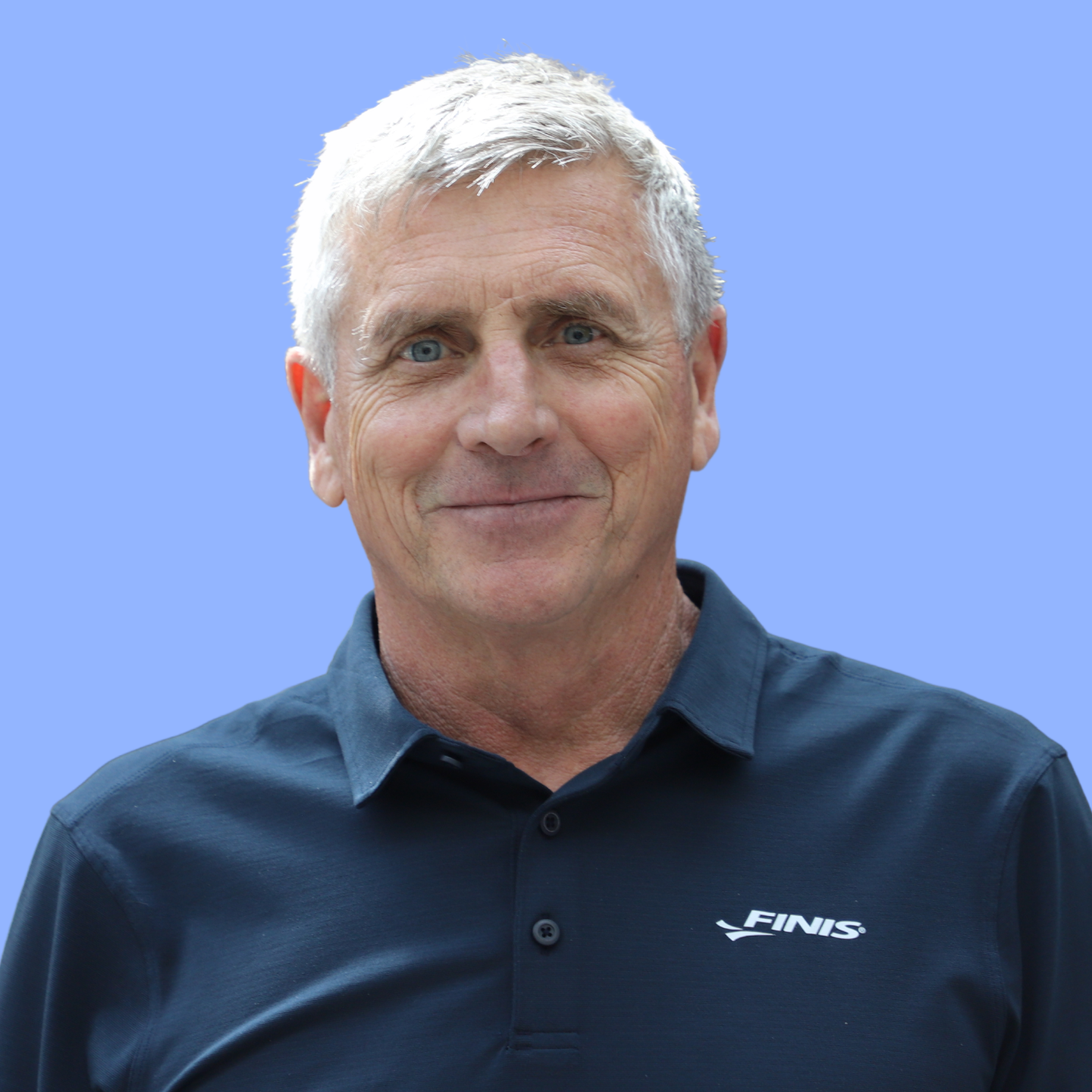
Swim teams do not just run on laps and meet results. They run on good teaching, consistent systems, and swimmers having access to the right teaching tools at practice. We sat down with John Mix, co-founder and CEO of FINIS, to talk about how a technique-first company got started, how FINIS thinks about product development, and why solving operational pain points is just as important as building great gear.
John put the purpose behind FINIS simply,
“We are only going to build a product if it’s going to have a specific purpose of improving technique.”
— John Mix
FINIS is elevating the sport of swimming by simplifying skill acquisition at every level.
This conversation is for swim coaches, board members, and parents who care about three things. Keeping swimmers improving, keeping families engaged, and keeping teams running smoothly.
1. John Mix and the FINIS origin story
FINIS started with a simple idea. Better technique keeps swimmers in the water longer, and makes the sport more rewarding at every level.
The story begins with the monofin. John first encountered a monofin during a semester abroad in Austria, brought it back to the U.S., and began studying patents. After Pablo Morales won Olympic gold in 1992, John and Pablo met up for a reunion swim, and that monofin quickly became the center of the conversation. Soon after, they agreed to start a business together, and in 1993, FINIS was born.
In the interview, John describes the moment the monofin stopped being “interesting gear” and became a teaching breakthrough. He watched Pablo try it, then immediately connect it to learning outcomes.
“This would be a great teaching tool to teach people how to improve their streamline and how to learn to kick in both directions.”
— John Mix
That moment shaped the mission from day one. Build training tools that teach technique, not just tools that make practice harder.
2. Innovation and product development, how FINIS builds “teaching tools you can train with”
FINIS’s approach to innovation is consistent. Identify a real problem on deck, prototype quickly, then refine until the product reliably teaches what it is supposed to teach.
John described one of the clearest habits behind the business, showing up on pool decks and watching closely.
“One of my favorite things to do is go watch and observe practice, see what they’re doing. Look for inefficiencies or pain points.”
— John Mix
That mindset translates into business best practices that swim teams can relate to immediately.
- Build from real user pain, not assumptions. If a coach is constantly re-explaining the same concept, or swimmers keep “missing” the same skill, that is a signal.
- Iterate based on long-term feedback, not one-time reactions. The details that matter show up over seasons, not just in one practice.
- Make the product teachable. If the coach cannot explain what the athlete should feel, the tool will not reach its potential.
John’s point here is worth reinforcing, because it applies to coaching and leadership, not just manufacturing.
“Please, coaches, take time to explain why you’re doing the drills or swimming with equipment.”
— John Mix
A good tool, plus a clear “why,” turns equipment into learning and instant feedback loop for the swimmer. .
3. FINIS answer to the tech suit dilemma: The Fuse Blank is a practical approach
Tech suits create a real tension in swimming. Families feel cost pressure. Athletes feel the pressure to fit in. Coaches and boards feel the responsibility to keep competition accessible.
FINIS’s approach includes a simple, team-friendly idea. A logo-free technical suit option that can work inside many different team realities.
The suit to spotlight is the Fuse Openback in Black Blank. It is an introductory-level technical racing suit with features designed to reduce drag, provide flexible compression, and fit a wide range of swimmers. It also comes in a blank, logo-free style that is intended for team customization, and for athletes who need to stay brand-compliant.
John summarized the social side of the dilemma directly.
“People want to fit in. Like, you got to want to fit in.”
— John Mix
That is why the “blank” detail matters. It is not just aesthetic. It can lower friction for teams, and lower stress for families navigating what is allowed, what is expected, and what is affordable.
Call to action: If you want the full breakdown, we recommend watching John talk through the broader suit lineup and the thinking behind it, including how FINIS approaches durability, pricing philosophy, and performance tiers. {{insert link to youtube section}}
4. Captyn x FINIS, simplifying equipment management for families, coaches, and boards
Even well-run teams can lose time and goodwill to one problem, equipment logistics.
Sorting days, missing items, spreadsheets, collecting money, distribution, returns, and the steady stream of equipment questions that end up in the coach’s inbox.
The Captyn and FINIS partnership is designed to remove that burden through an integrated store experience and drop shipping directly to families. FINIS handles fulfillment and customer service, including returns, so coaches are not stuck acting like a warehouse.
John captured the principle behind this kind of operational improvement in one short line.
“Simplicity wins.”
— John Mix
What this changes in practice
- Families: orders ship directly to the home, and support is handled through FINIS.
- Coaches: no more sorting, bagging, or tracking down missing items, and far fewer spreadsheet-driven headaches.
- Boards and team admins: a cleaner, repeatable system that reduces risk and reduces reliance on a single volunteer to “own” equipment season after season.
John also described the service model he wants coaches to experience when they reach out.
“I want to be known as like the ace hardware of swimming.”
— John Mix
The point is not just gear, it is guidance, responsiveness, and making the job easier for the people running programs.
5. Quick roundup, the products John talked about and what they teach
John’s product explanations consistently return to one idea. The best tools create feedback athletes cannot ignore, and they accelerate learning in a sport where coaching is often happening at a distance.
John described the role of equipment in a nonverbal environment like this.
“These little tools give us a chance to wire our brains.”
— John Mix
Here is a quick, skimmable recap of what John highlighted.
- Monofin
- Teaches connected dolphin kick mechanics, symmetry, and body line.
- Make errors obvious, you cannot fake the movement or the fin slips.
- John love’s kicking on your side as a great way to teach bi-directional kicking.
- Front snorkel
- Removes breathing complexity so swimmers can focus on alignment, pull patterns, and overall connectivity.
- Creates a way to slow down and hold quality positions longer or do drills without worrying about the breath.
- John loves to use it when working on bodyline and diaphragm breathing on aerobic sets.
- Tempo trainer
- Helps swimmers understand the two-variable reality, stroke rate times distance per stroke.
- Great when training race pace and you don’t want swimmers to over swim to make a time.
- John’s coaching emphasis is ownership, swimmers learn more when they control the tool.
- Agility paddle
- Strapless design that reinforces holding water and correct positions.
- The design helps with instant feedback on hand angels and slipping in the pull pattern.
- John loves using it in warmup, and late in practice when technique often gets sloppy to promote neural learning.
- Manta paddle
- Encourages a strong extension and early catch, and can reinforce hip-driven freestyle.
- Great power tool for engaging the catch early.
- John loves this for power days because athletes can engage their lats earlier and build a more powerful stroke for race day.
- Ankle buoy
- A “no cheating” tool for core engagement and stability feedback.This tool forces total core engagement from mid upper back, through your abs, glute and hamstrings.
- Great for balance and connectivity work in backstroke and freestyle.
- John loves this tool for descending free and back work following the crawl, walk run teaching method.
Closing
FINIS’s story is not just about products. It is about building swimmers through technique, building teams through clarity, and reducing friction that pushes families out.
John framed the long-term impact of coaching in a way that applies to every stakeholder, not just the person writing the workout.
“We really have a chance to impact people’s lives.”
— John Mix
When teams keep learning simple and systems smooth, swimmers stay longer, families stay happier, and coaches get to focus on what they do best.
https://www.finisswim.com/
https://www.captyn.com/

More Ways to Explore Captyn

Demo
See Captyn in action by exploring top features and watching a free demo of the platform

Success Stories
See how organizations of all sizes are operating and growing their businesses on Captyn

Live Events
Meet up and chat with us at one of the many live events we sponsor and attend all across the country